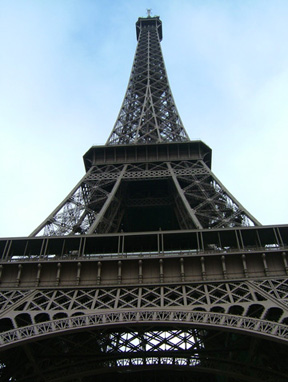
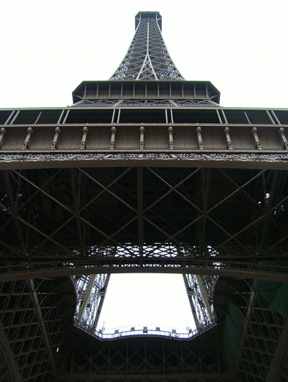
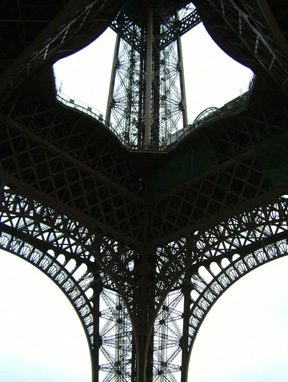
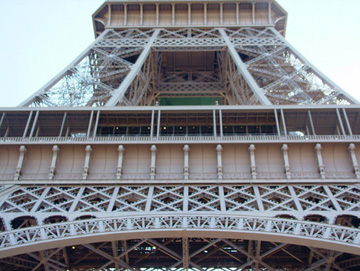
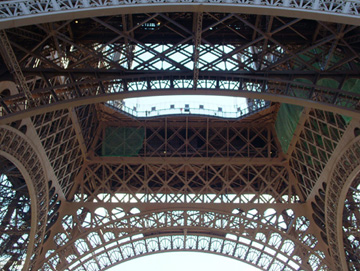
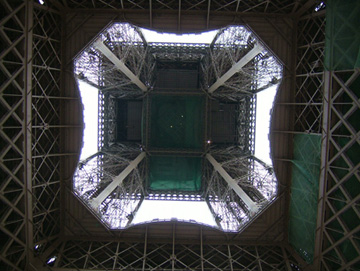
The three platforms have a total of 1,652 steps.
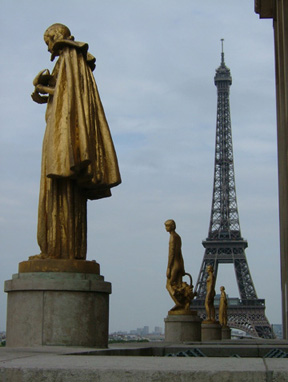
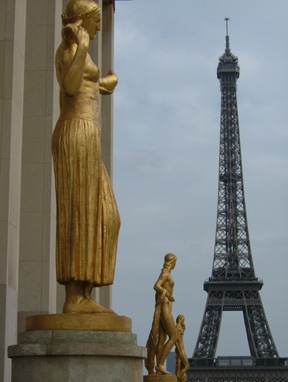
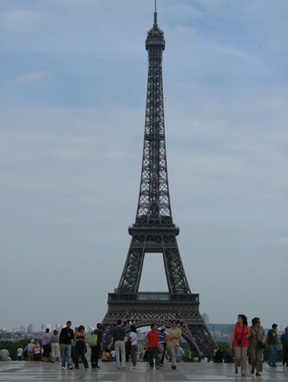
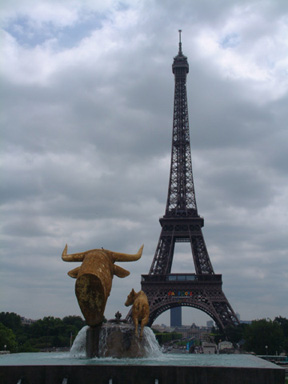
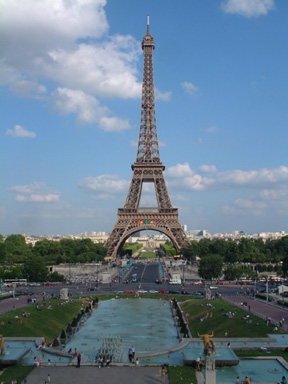
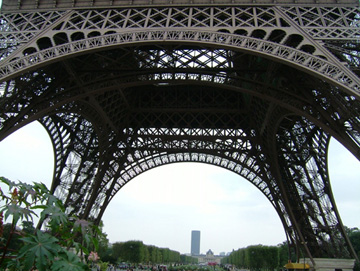
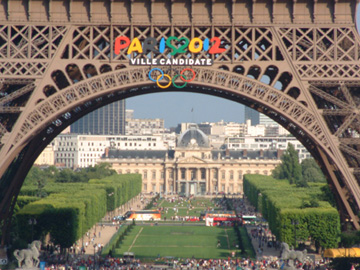
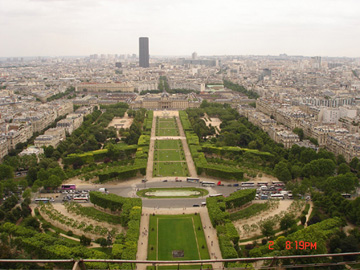
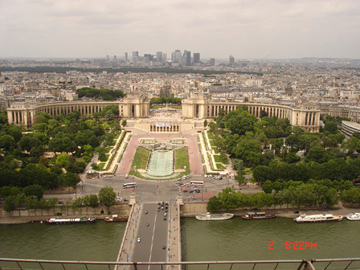
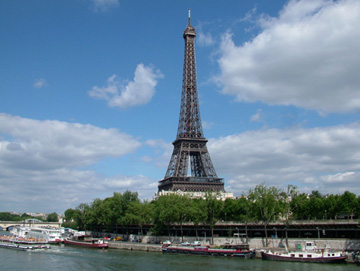
The Eiffel Tower is located in the 15th arrondissement of Paris, on the left bank of the winding and poetic Seine River. Its four legs are founded in the Champ de Mars garden, with the park extending to the École Militaire, offering a distant view of the Montparnasse Tower and facing the Palais de Chaillot across the Seine (this is an excellent spot to view the full panorama of the Eiffel Tower; visitors can start their tour from here).
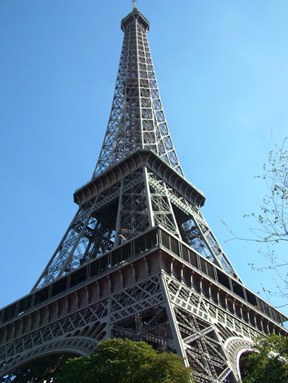
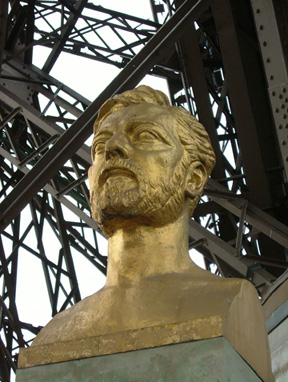
Mentioning Paris, France, immediately brings the Eiffel Tower to mind; it has become the symbol of modern Paris. Named after its engineer, Gustave Eiffel, it was a product of the 1889 World's Fair (the source text erroneously states 1898). Originally 300 meters high, it now reaches 320 meters with various antennas added. As early as 1884, there were plans in Paris to build a unique iron tower. Designed by Engineer Eiffel, construction began on July 28, 1887, involving 300 workers installing pieces at height. After two years of day-and-night work, this massive project was completed.
This unprecedentedly forward-looking structure was considered a monstrous aberration at the time, clashing with the ancient charm of Paris. This reaction was naturally linked to the nostalgic mindset of Parisians. From many avant-garde perspectives, anything "new" is viewed as somewhat "strange" or "abrupt"; otherwise, how could it be called "new"? Fresh visuals bring a sense of novelty, shocking people with bold initiatives, whether positive or negative. For example, the poet Paul Verlaine radically declared: "I would rather take a detour than see that monster." Of course, it was inevitable that avoiding her sight in Paris was difficult. Alexandre Dumas fils, Guy de Maupassant, and Charles Garnier, the architect of the Paris Opera House, also voiced criticisms.
Today, the Eiffel Tower reigns supreme. Her silhouette appears in every corner of Paris, becoming an image familiar to all and one of the most famous buildings in the world. She attracts pilgrims from around the globe every year to admire her welcoming presence. Eiffel originally wrote: "This tower, 300 meters high, will become the highest building in the world." It held this title until 1931, when it was surpassed by the Empire State Building in New York City, USA.
By the early 20th century, specifically in 1909 when the lease expired, authorities had considered demolishing this unprecedented structure. However, her height saved her, quickly turning her into an ideal location for international radio broadcasting, thereby changing her fate. In 1916, an Atlantic telegraph relay antenna was installed at the top of the tower. Starting in 1957, a television antenna was added, and today she serves as an excellent site for mobile phone wireless antennas.
Identity of the Paris Tower:
- A product of 19th-century modernism.
- Height: 324 meters (originally 300 meters).
- First level: 57 meters high, with 360 steps.
- Second level: 115 meters high, with 700 steps.
- Third level: 274 meters high, accommodating 800 people.
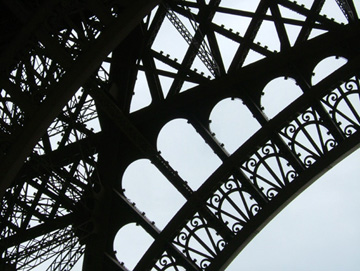
- The entire tower used 2.5 million rivets.
- The tower sways left and right by 12 centimeters.
- Total weight: 10,100 metric tons.
- Repainted every four years.
- Uses hydraulic elevators.