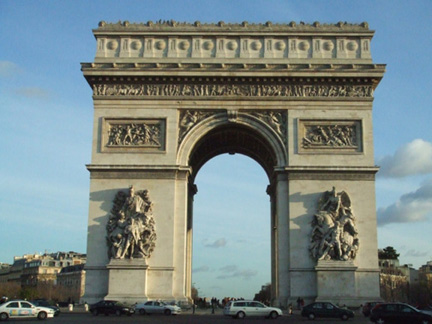
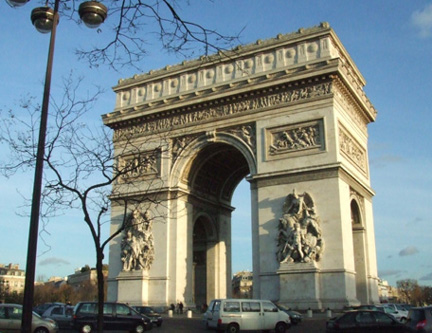
The magnificent Arc de Triomphe is located on Place Charles de Gaulle at the end of the world-famous Champs-Élysées in the 16th arrondissement. It serves as the hub for twelve avenues radiating outward like rays of light, forming the largest roundabout in Paris. On July 14, French National Day, grand military parades are held here, drawing thousands of tourists along the route from the Arc de Triomphe via the Champs-Élysées to Place de la Concorde.
Place Charles de Gaulle had already been an intersection of five avenues by the late eighteenth century. In 1805, after Napoleon’s glorious victory at Austerlitz, he promised his soldiers, “You will return through the Arc de Triomphe,” and ordered its construction that year. Architect Jean Chalgrin was commissioned to design a magnificent monument to commemorate his brave army and glorify his great achievements. When Napoleon married Marie-Léonie, daughter of the Austrian Emperor, in 1810, he planned a unique wedding procession through the Arc. As the foundation had just been laid, the architect built a full-scale model to fulfill the Emperor’s wish. However, following Napoleon’s defeat at Waterloo in 1815, he lost power and construction was halted. Unexpectedly, the Arc was completed under Louis-Philippe. In 1840, Napoleon’s ashes were transported by carriage through the Arc in a deeply moving ceremony. In 1854, during Baron Haussmann’s planning of modern Paris, seven additional avenues were added, creating today’s spectacular radial layout.
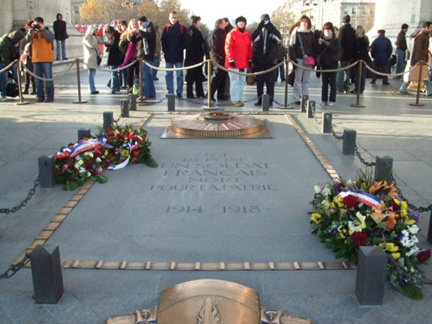
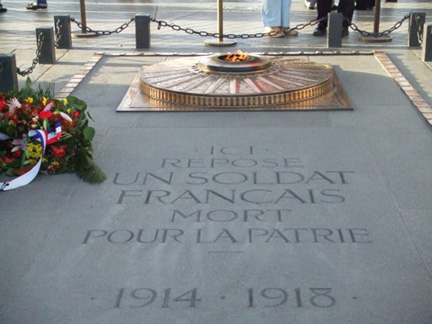
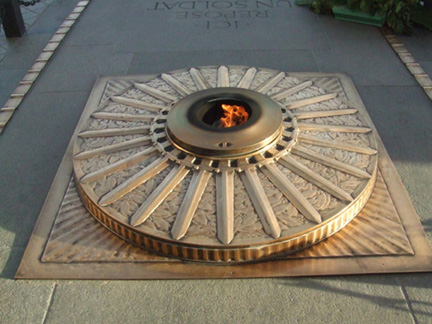
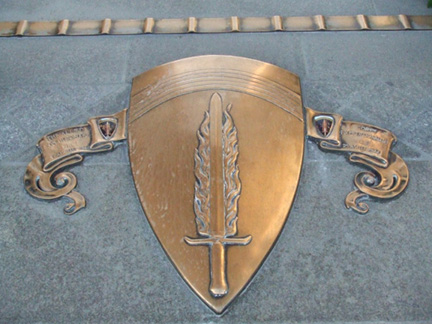
In 1885, the state funeral of France’s great writer Victor Hugo was held beneath the Arc. Following the end of World War I (July 14, 1919), Allied victory parade troops passed through the Arc. On November 11, 1920, an unknown soldier who died in the war was buried there to honor unnamed heroes. Since November 11, 1923, a memorial flame has burned continuously. On August 26, 1944, Liberation Day, General de Gaulle led citizens in a march starting from the Arc. To this day, every July 14 military parade begins at the Arc.
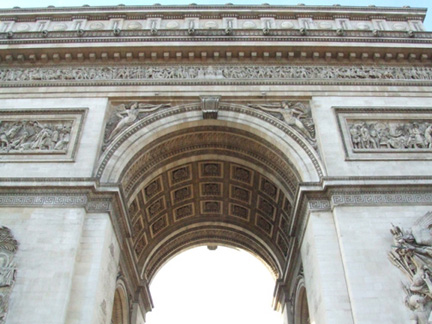
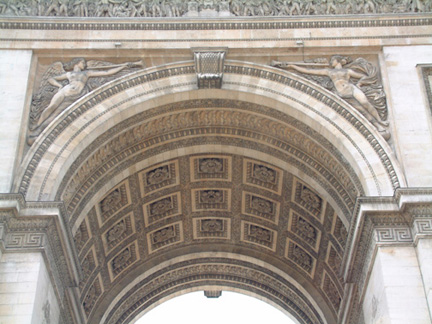
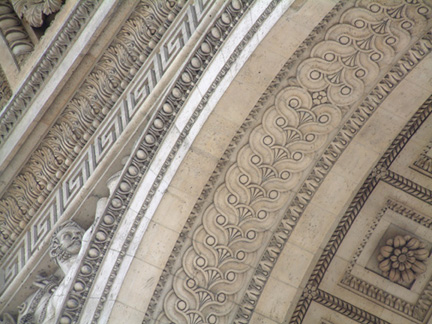
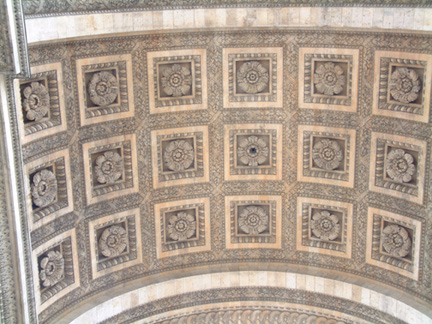
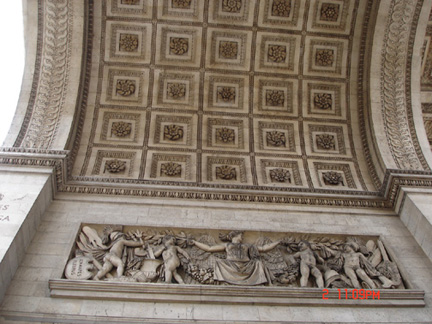
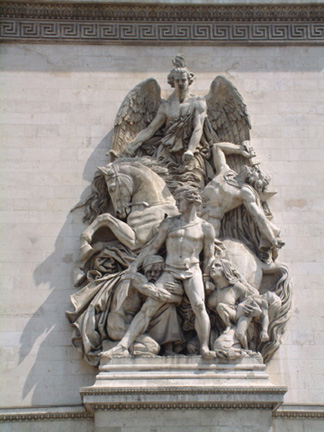
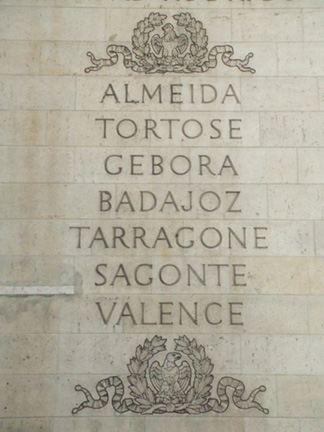
Of course, the majestic Arc itself commemorates Napoleon’s military achievements; the entire structure depicts his exploits, adorned with intricate carvings and reliefs:
Facing the front toward the Champs-Élysées Avenue:
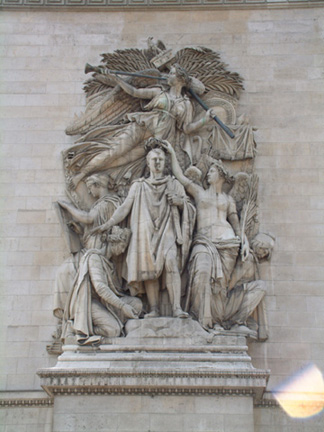
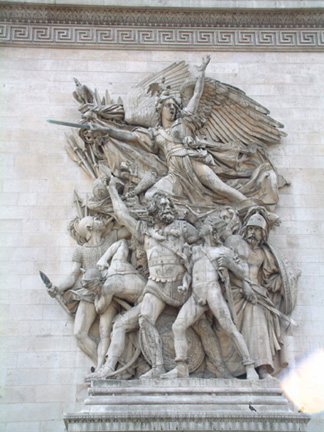
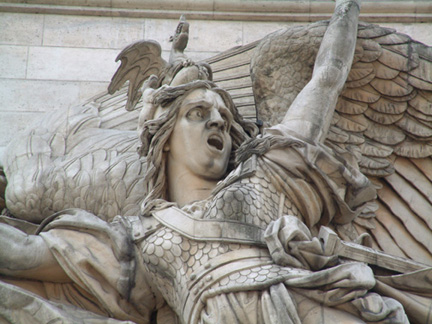
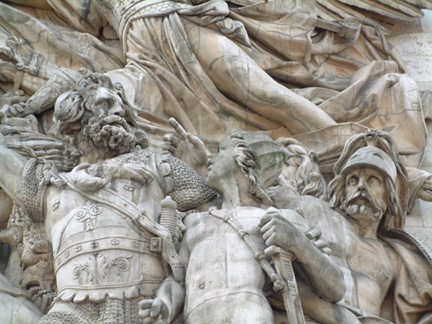
On the “right,” it depicts the heroic 1792 departure of volunteer troops, known as the “Marseillaise,” showing people shedding blood for the nation, which became France’s national anthem. This masterpiece was carved by Rude. Above it, a sensitive relief portrays the solemn funeral of Napoleon’s beloved general Marceau, who crushed the Austrians in 1795 but died for his country the following year. On the “left,” it depicts Napoleon’s triumphant feats, praising the Treaty of Vienna, a work by J-P Cortot. Above it, scenes show Napoleon’s victorious campaign at Aboukir in Turkey in 1799.
Facing the front toward the Avenue of the Grande Armée:
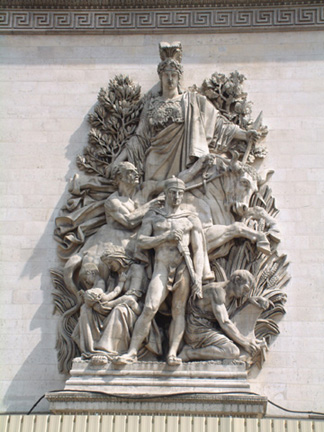
On the “right,” it depicts the prosperous life of the peaceful era of the Great Empire, with above it the grand campaign to occupy Alexandria. On the “left,” it expresses the people’s heroic resistance and fighting spirit, both works by Etex. Above it, it shows the heroic crossing of the Arcole Bridge despite danger to life.
Facing the Kleber Avenue side (side of the Arc):
It depicts the heroic scene of the Jemappes battle.
Facing the Wagram Avenue side (side of the Arc):
It describes the heroic battle scene of Austerlitz.
Above these rectangular relief panels run decorative series: the east side depicts scenes of Napoleon’s imperial army marching out; the west side records the heroism of the army returning in triumph.
Identity of the Arc de Triomphe:
A representative of Neoclassical architecture, built in 1836.
Height: 50 meters; Width: 45 meters.
Commemorates the military achievements of the Napoleonic Empire.
Tomb of the Unknown Soldier (military memorial).