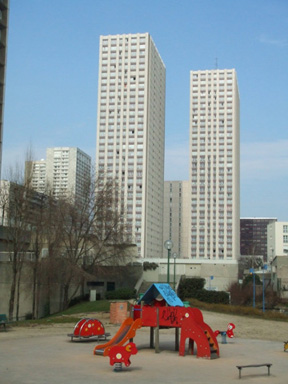
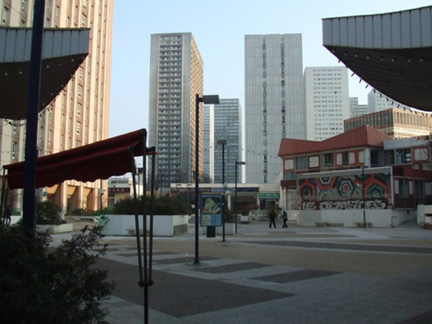
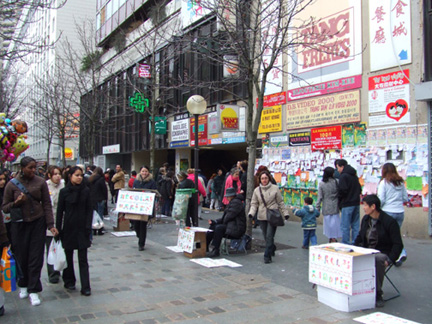
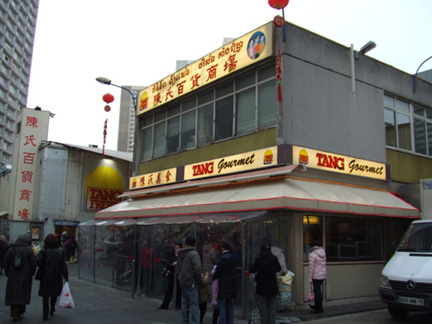
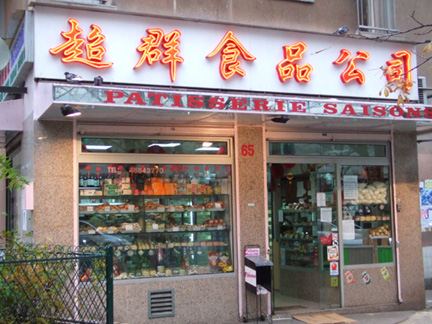
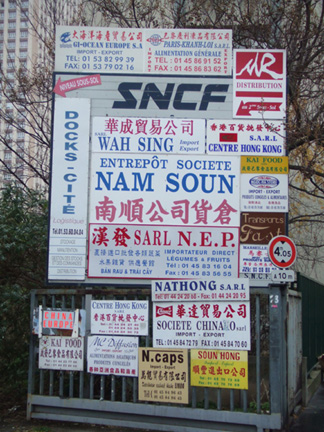
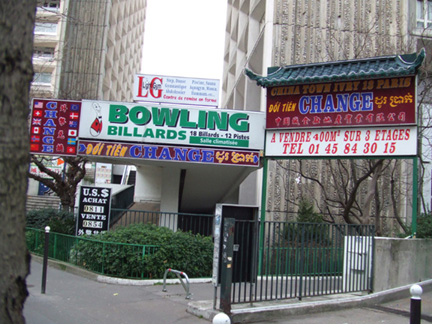
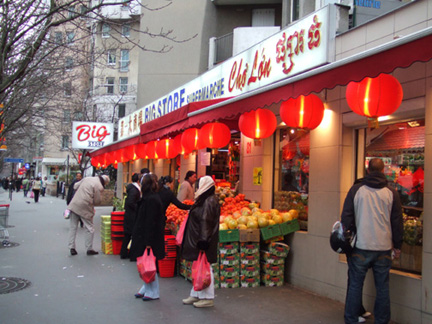
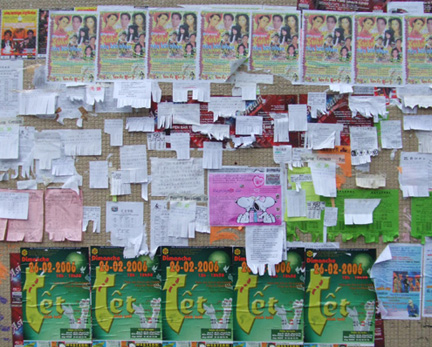
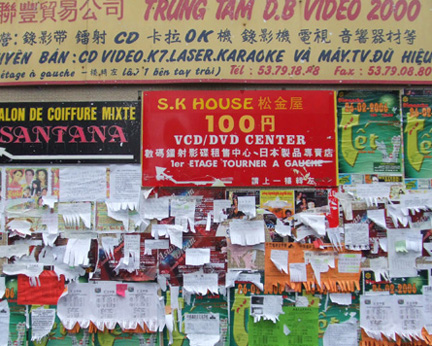
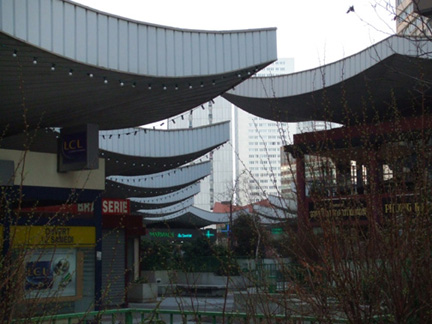
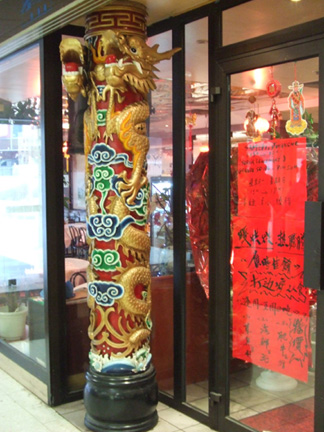
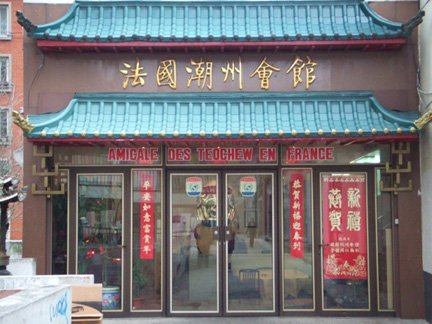
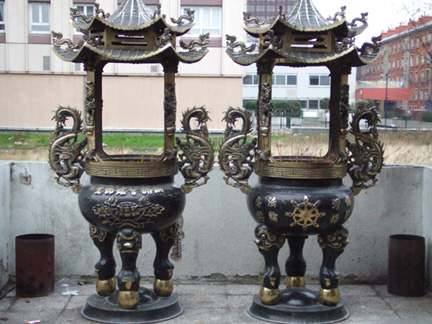
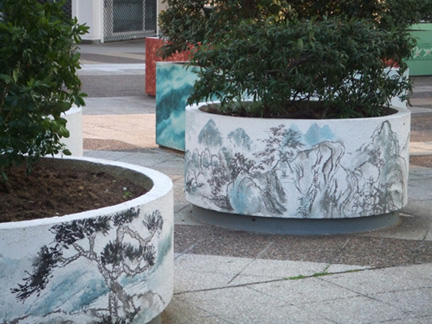
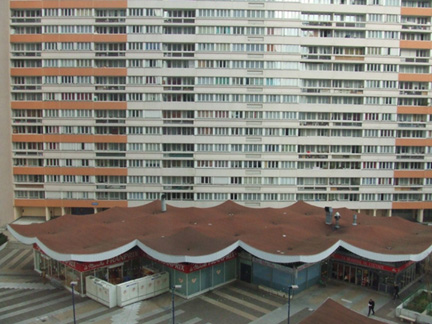
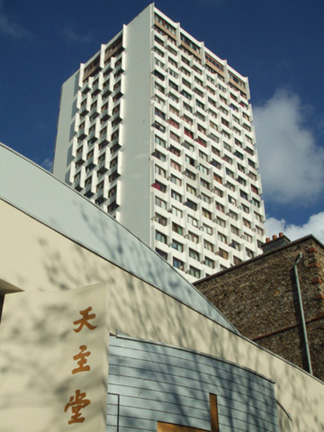
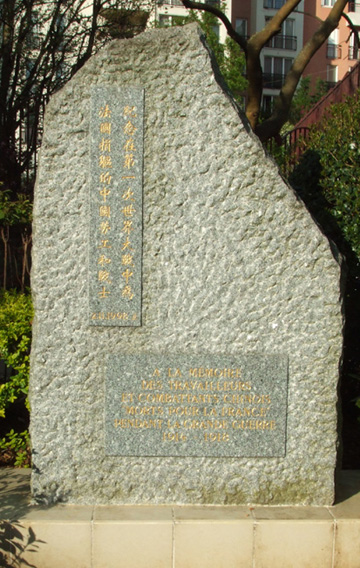
Paris has two Chinatowns, one large and one small. The larger is in the 13th arrondissement, while the smaller is located in Belleville in the north of the city. The 13th arrondissement is the most substantial; its Chinatown centers around the Porte de Choisy and Porte d'Ivry metro stations, extending along the streets of Choisy and d'Ivry up to Tolbiac and continuing to Place d'Italie. This triangular core is home to a diverse community including Chinese (predominantly from Guangdong, Chaozhou, and Wenzhou), Vietnamese, Khmer, and Lao populations living side by side. Amidst this modern landscape of high-rises, many Chinese residents or daily commuters practice Tai Chi in gardens or plaza squares each morning. A monument dedicated to Chinese laborers and soldiers who participated in World War I stands prominently in a small garden.
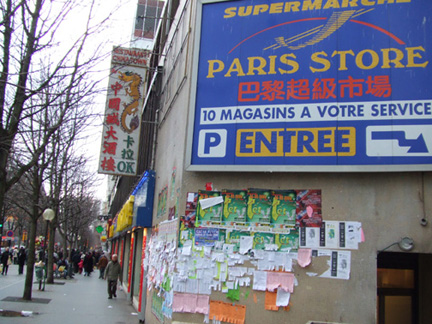
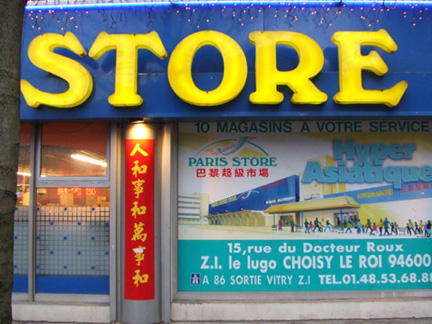
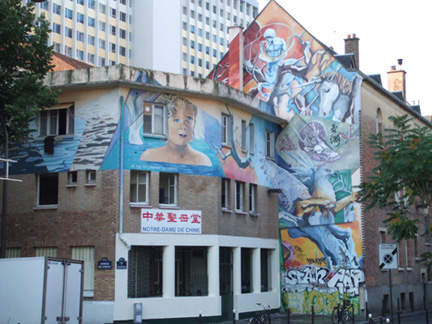
The area features large department stores (with Chen's Supermarket being the largest, operating three branches here, alongside others like Paris Store and First Mall), Asian grocery shops, restaurants (such as the Large Chinatown Restaurant, New Chinatown Restaurant, and Phoenix Restaurant), clothing stores, record shops, duty-free stores, butchers, insurance agencies, and more. It offers an all-encompassing variety, including temples, ancestral halls, and Chinese Catholic churches. Tens of thousands of Chinese people live and work here, creating a unique Parisian atmosphere found nowhere else. In this predominantly Chinese environment, Mandarin, Wenzhounese, and Cantonese are commonly spoken, allowing visitors to feel closer to their homeland and temporarily alleviate homesickness.
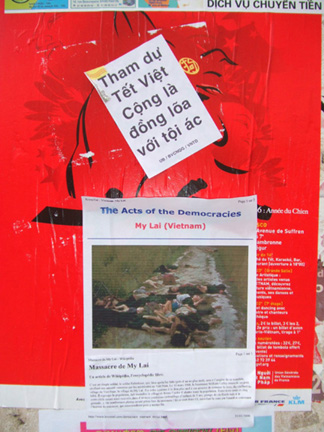
France was once a colonial power in Indochina, sharing close historical ties with Vietnam, Laos, and Cambodia in Southeast Asia. After decolonization, the United States replaced France in the region's political landscape. The tragic Cold War era in Southeast Asia—marked by the fall of Saigon in 1975, the rule of the Khmer Rouge, and the establishment of the Lao People's Democratic Republic—led to a massive exodus of "Boat People." These daily tragedies gradually subsided in the 1980s, prompting Western nations to adopt humanitarian immigration policies to receive these refugees. France, due to its colonial history, received numerous Vietnamese and Cambodian refugees, including many ethnic Chinese from those regions. Consequently, Paris Chinatown began to form in the late 1970s. Why the 13th arrondissement? At that time, this new area of high-rise buildings was under development. Developers aimed to attract young middle-class families with modern architecture but failed, as the concrete structures lacked greenery. The government then leased the properties at low cost to these refugees. They began cultivating, developing, and investing in various industries they excelled in, such as restaurants and grocery stores, which subsequently expanded to accommodate relatives and friends, creating numerous job opportunities for the Chinese community.
In the 1980s, businesses in the 13th arrondissement multiplied like mushrooms after rain, with Chen's Supermarket actively expanding its territory. From restaurants and groceries to import-export trade, finance, insurance, and real estate, a distinct Chinese district emerged, accompanied by two newspapers: Europe Times and Europe Daily. From the 1990s to the present, French storefronts have decreased while Asian-Chinese shops have taken over. Black hair and yellow skin have become visible markers of this economic landscape. Various Chinese associations have been established, expanding business operations and indirectly or directly engaging in French politics. This influence has spread from the 13th arrondissement to northern Paris and the greater Paris region, even across Europe. Notably, the Chen brothers' empire has expanded to major European cities, spanning both Europe and Asia. Today, the 13th arrondissement is the most important Chinese district in Europe economically. Every Lunar New Year brings continuous festivities, attracting significant media coverage and crowds. Dragon dances, lion dances, floats, and costume parades make visitors feel as if they are in China, momentarily forgetting where they are.
The Chinese presence in Paris dates back long before the refugee waves. Even earlier, many Chinese lived in Paris, predominantly from Wenzhou. They were famous for the "three knives": the kitchen knife, the barber's razor, and the leather knife. Early on, they operated restaurants, barbershops, and leather goods stores. To this day, the major leather bag merchants on Rue du Faubourg du Temple in the 3rd arrondissement are dominated by Wenzhounese entrepreneurs.