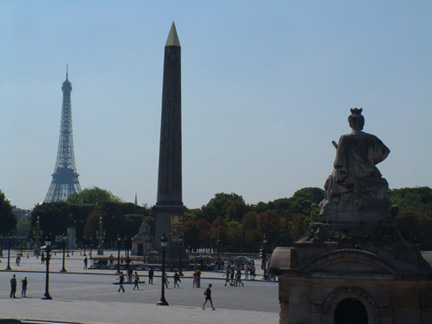
Located in the heart of Paris, this bustling square is centered around an Egyptian obelisk. It is one of Paris’s most important and beautiful sites, as well as its most dramatic; both its history and landscape evoke emotion and aesthetic appreciation. Some call it the most beautiful square in Europe, a title that seems well-deserved.
It connects to the lush Tuileries Garden and the world-famous Champs-Élysées (with the obelisk offering a perfect vantage point for the avenue’s perspective, looking toward the Arc de Triomphe, the Louvre behind, and the Eiffel Tower in the distance). It sits on the right bank of the winding Seine, facing the Bourbon Palace (Palais Bourbon) toward the French National Assembly, while extending leftward toward the solemn, Greek-style Madeleine Church.
Before the French Revolution, the square was known as Place Louis XV, featuring a large equestrian statue of King Louis XV. In 1770, during celebrations for the marriage of Louis XVI and Marie Antoinette, fireworks caused a tragedy where 133 people died in the crowd crush. The statue was dismantled during the Revolution (1792), and the site became the Place de la Révolution. On January 21, 1793, a guillotine was installed, turning it into a famous execution site. King Louis XVI was executed first, followed by Queen Marie Antoinette. In total, 1,343 people were guillotined there, including Madame du Barry, Charlotte Corday, Robespierre and his allies, Danton and his friends, and Madame Roland. Executions continued until 1795, after which the square was renamed "Concord" to signify a new era of peace.
The current square was designed between 1836 and 1840 by the renowned architect Jacques-Ange Gabriel. It is largely an open space, with two historic columned buildings on the left side (the High Hotel and the French Navy Headquarters), forming an octagonal shape. At its center stands the pink Egyptian obelisk, 23 meters high and weighing 220 tons, covered in hieroglyphs. A gift from former Egyptian ruler Mehemet Ali to King Charles X, it arrived in France in 1833 under Louis Philippe. To depoliticize the square, the king placed this exotic monument at its center.
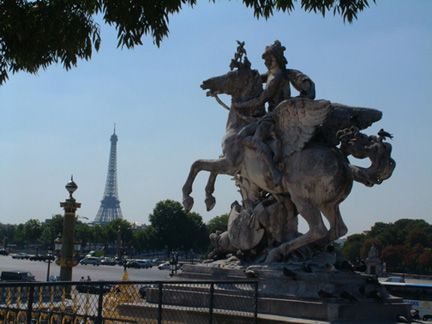
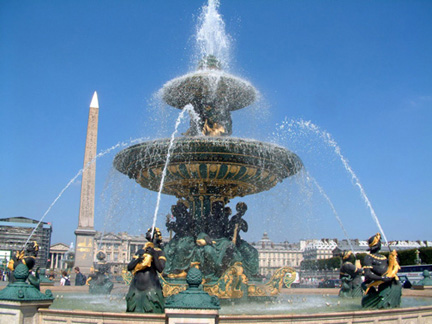
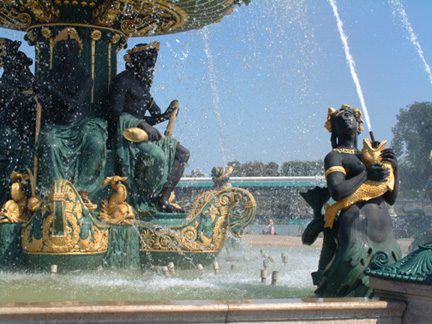
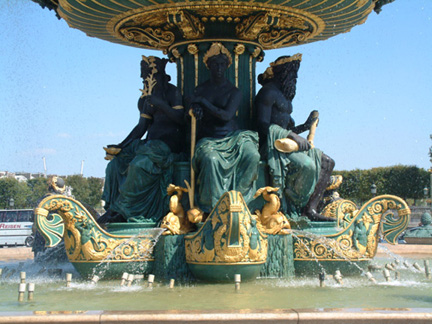
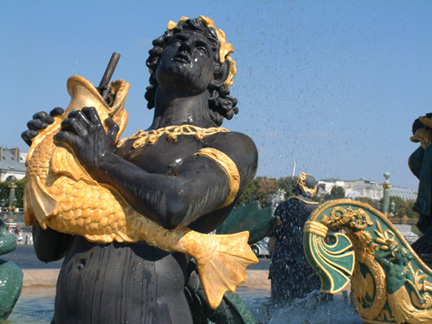
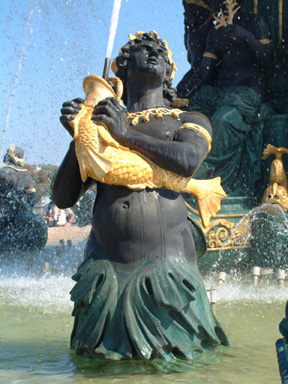
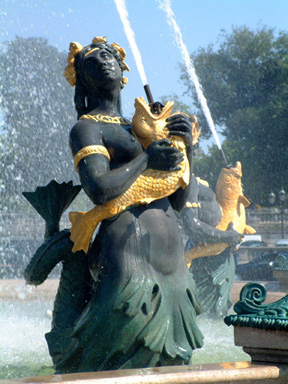
Two magnificent fountain statues stand symmetrically on either side, inspired by the fountains of Vatican Square. Each corner of the octagon features a large statue symbolizing a major French city. However, at the entrances to the Champs-Élysées and Tuileries Gardens, dynamic horse statues rise on high pedestals, creating a spectacle akin to an outdoor sculpture museum. Another striking feature is the golden streetlights; their perfect bases testify to French wealth and quality of life. Every July 14, the French National Day military parade must pass through here.