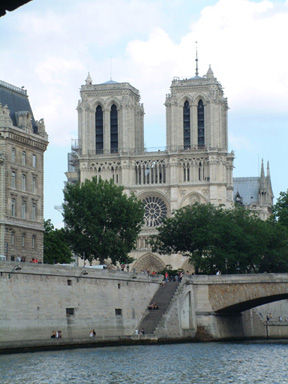
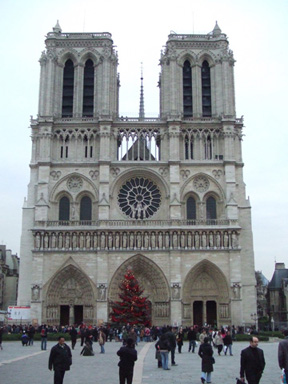
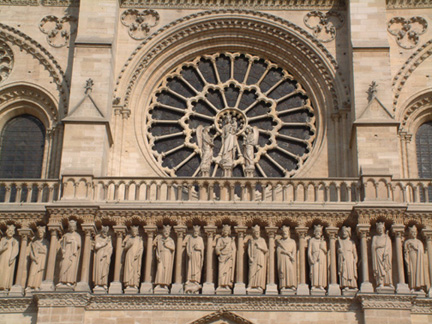
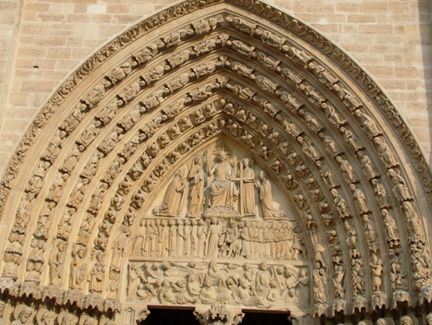
Notre-Dame is located on the Île de la Cité in the Seine River, Paris’s most magnificent and captivating cathedral. Its rigorous, perfect symmetry makes it an outstanding Gothic masterpiece of the Western Middle Ages and a symbol of French civilization.
Built on the site of an ancient Roman temple, the project was initiated by Maurice de Sully, Archbishop of Paris, who sought to establish a grand cathedral for the capital after his appointment in 1159. Construction began in 1163 with the choir, followed by the nave and transepts. The facade was completed around 1200, and the rear spire in 1245. Over the next five years, the north exterior of the transept was finished, and eight years later, the south exterior. Under the direction of architects Jean de Chelles and Pierre de Montreuil, generations of craftsmen—masons, carpenters, blacksmiths, sculptors, and glaziers—worked tirelessly until the cathedral was fully completed in 1345, becoming one of the most famous churches of the Middle Ages. Notre-Dame measures 130 meters in length, with towers reaching 69 meters and a spire at 90 meters.
The cathedral is deeply intertwined with French history. In 1239, King Louis IX placed relics acquired from Constantinople within its walls. In 1302, Philip the Fourth convened the first Estates General here. It hosted numerous ceremonies, including coronations (such as that of the young Henry IV of England in 1430), the rehabilitation of Joan of Arc in 1455, and the wedding of Margaret of Valois to Henry of Navarre in 1572. A grand ducal funeral took place in 1687, and in 1708, Louis XIV modified the altar per his father’s wishes to honor the Virgin. During the French Revolution, it was converted into the Temple of Reason and nearly destroyed; it was closed from 1795 to 1801. Re-consecrated in 1802, it witnessed Napoleon’s coronation by Pope Pius VII in 1804 and the baptism of the King of Rome in 1811. Victor Hugo’s novel The Hunchback of Notre-Dame was published in 1831 (referenced as 1931 in source text error). Major restoration under Viollet-le-Duc began in 1844 and ended in 1864. It served as the site for the Paris Liberation commemoration on August 16, 1944, Charles de Gaulle’s state funeral on November 12, 1970, and a special prayer service by Pope John Paul II on May 31, 1980.
Identity of Notre-Dame:
A representative work of Western Gothic architecture.
Construction began in 1163 and took 200 years to complete.
Dimensions: Length 130 meters, Width 40 meters, Height 69 meters.
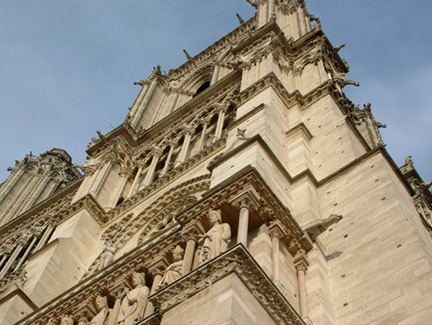
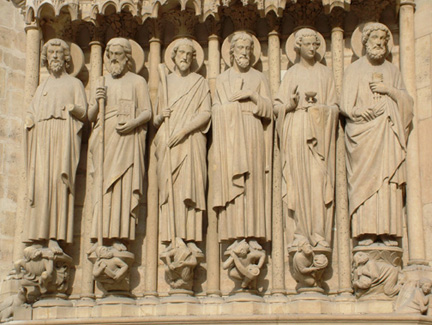
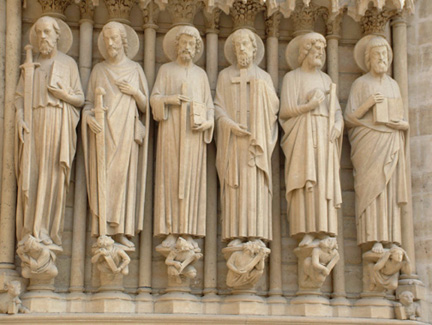
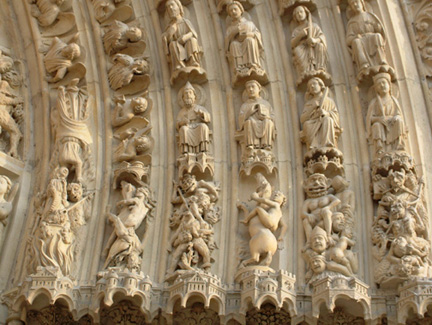
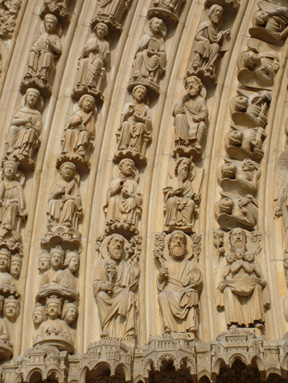
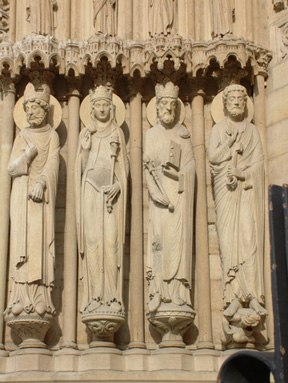
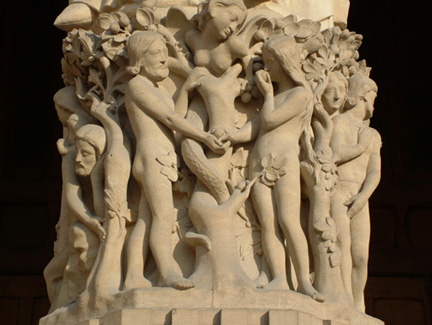
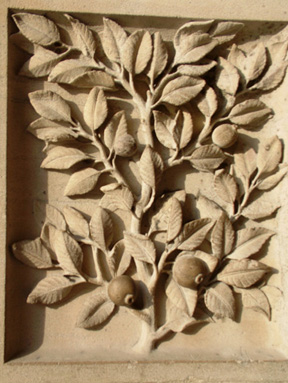
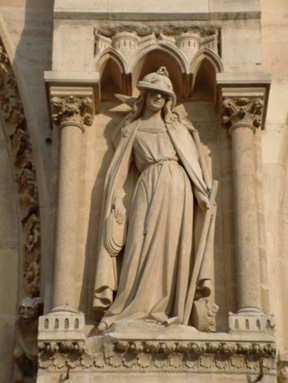
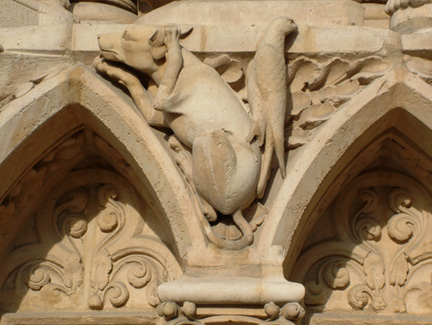
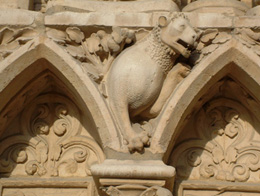
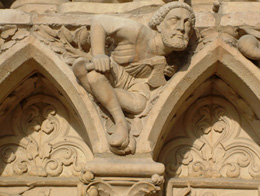
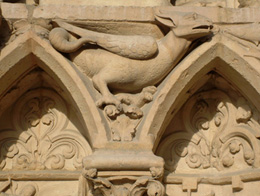
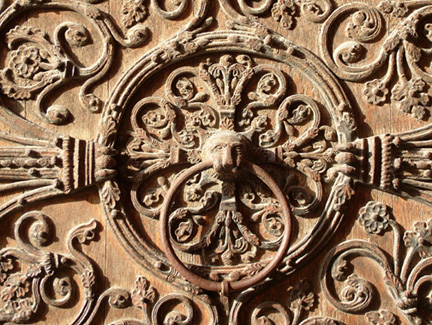
Exterior features include statues, reliefs, flying buttresses, gargoyles, and bell towers.
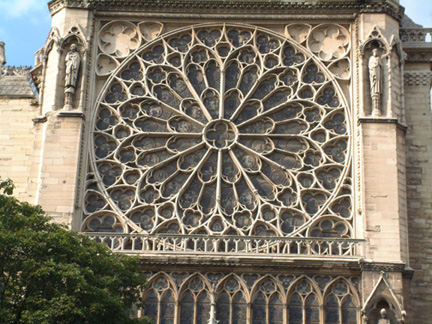
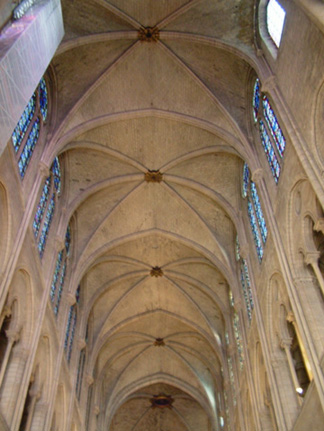
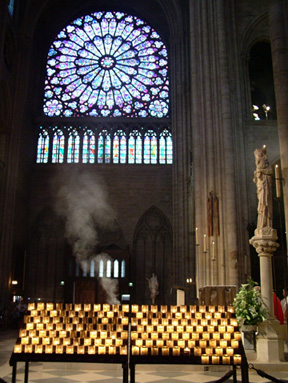
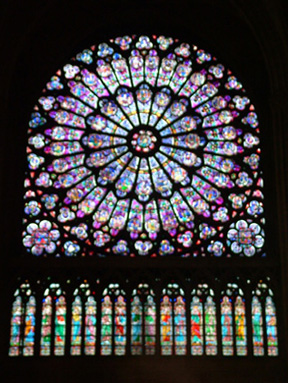
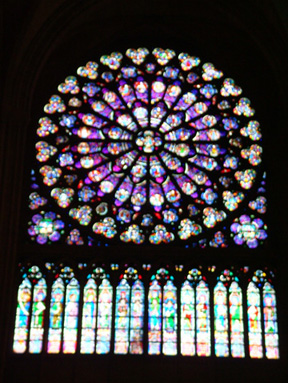
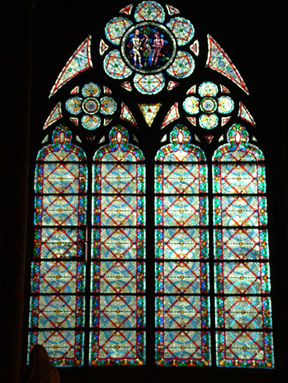
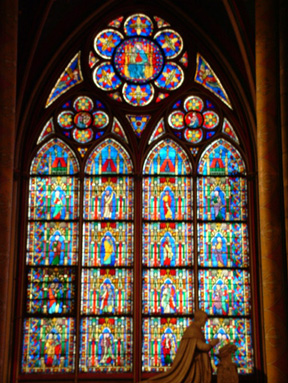
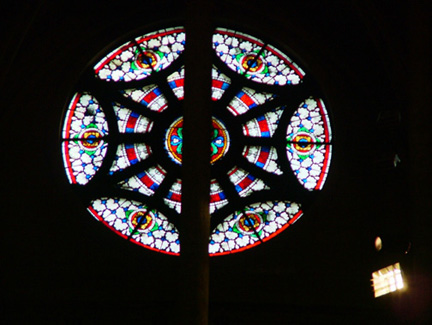
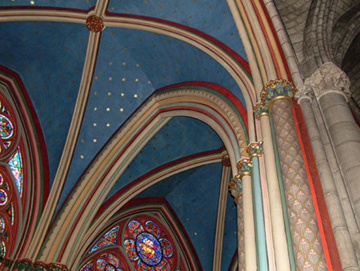
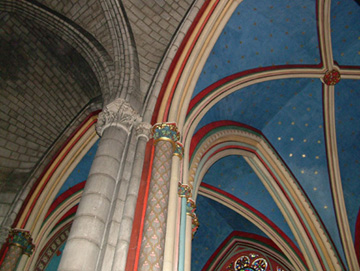
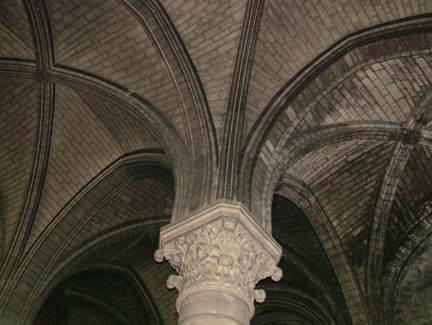
Interior features include columns, rose stained-glass windows, ambulatory altars, statues, and ribbed vaults.