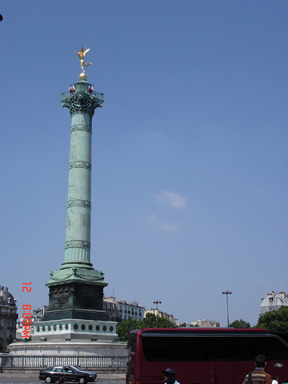
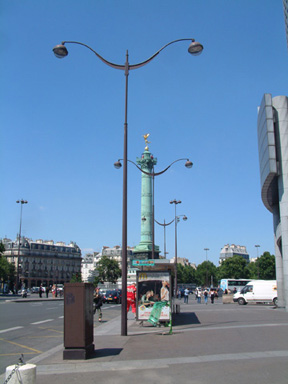
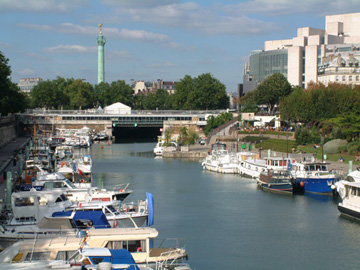
Mentioning the Bastille inevitably brings to mind the French Social Revolution. It was the most symbolic site of liberation; today, nothing remains visible except the circular "July Column" monument (52 meters high) in the center of the square. However, this does not commemorate the 1789 Social Revolution, but rather serves as a memorial to the bloody revolution of July 27, 28, and 29, 1830, which established the constitutional monarchy of the July Monarchy (do you remember Delacroix's painting "Liberty Leading the People" in the Louvre?), as well as to another revolution in 1848.
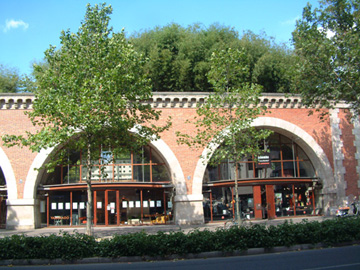
The Bastille had already been a feared prison since the time of Charles V (1382). Notable prisoners included the landlord Bassompierre, the thinker Voltaire, the orator Mirabeau, and the knight Latude (imprisoned for 28 years with three escape attempts). The prison was liberated in 1789, and its walls were demolished. In 1847, Rue de Lyon was opened; in 1866, Boulevard Henri IV was completed; and in 1859, the Bastille railway station was built on the site of the current opera house. This station operated until 1970 (the promenade now on the side of the opera house is a converted track that once led to the suburbs). Today, one can only vaguely locate the former prison walls along the cobblestone section of Boulevard de la Bastille from number 5 to 49. Therefore, all major demonstrations in Paris either start from or take place at Place de la Bastille, carrying significant meaning and symbolism.