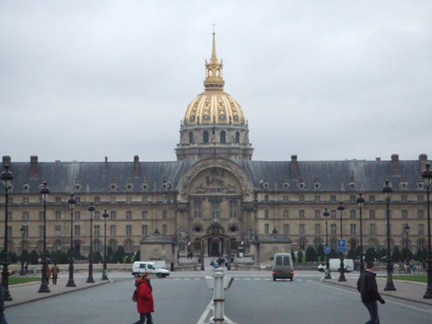
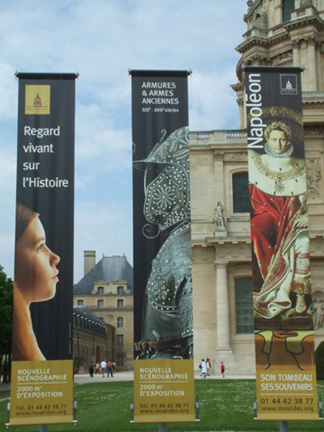
The Military Museum at Les Invalides houses the tomb of Napoleon I. The complex consists of a large group of buildings, including the Invalides, the Church of Saint-Louis, and the Dome Church. King Louis XIV founded the Invalides in 1671; construction took nearly 30 years to complete. In 1706, two churches were added: the Soldiers’ Church (now the Church of Saint-Louis) and the Dome Church, which enhanced the site’s splendor. Viewed from the gilded Pont Alexandre III, considered the most beautiful bridge over the Seine, one sees a magnificent panorama. Between Liberal Bruant’s classical buildings and Mansart’s dome, the vast Invalides gardens—designed by Mansart’s brother-in-law, Robert de Cotte—stretch about 500 meters long and 250 meters wide, forming a grand perspective that resembles an airfield.
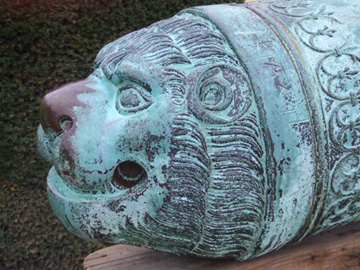
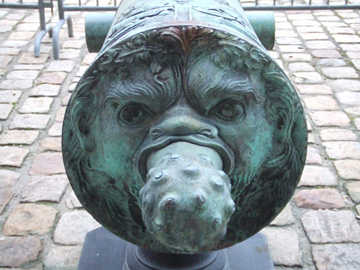
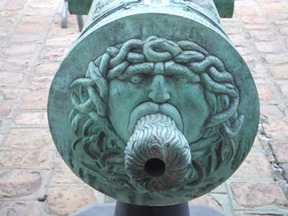
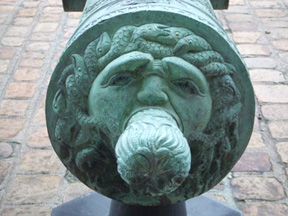
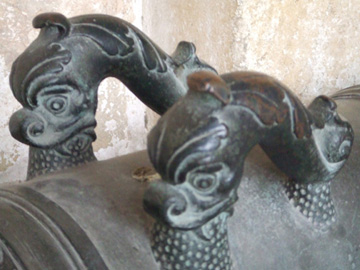
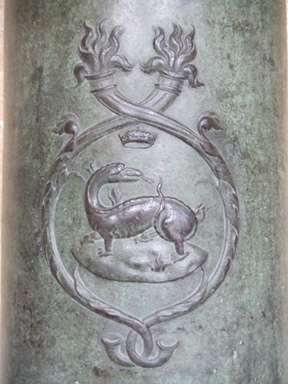
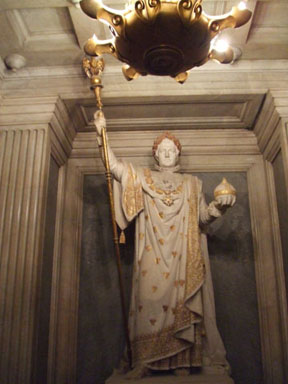
In front of the Invalides lies a geometric French garden. Along the moat stands a row of 17th- and 18th-century bronze cannons, including 18 “salute guns” fired on November 11, 1918, for Armistice Day, and on July 14, 1919, during the Bastille Day military parade. These were removed during the German occupation in 1940 and returned after the war. The Invalides buildings feature a solemn, austere style, measuring 196 meters in width with four rows of windows. A grand central entrance is flanked by two wings adorned with decorative motifs of weapons surrounding skylights. Above the main door, bas-reliefs depict the gods of Prudence and Justice surrounding a heroic Louis XIV. Entering through the main gate leads to the Cour d’Honneur, where a majestic statue of Napoleon stands. This double-story arcade building, arranged in a quadrangle layout, houses the Military Museum.
Church of Saint-Louis After visiting the Military Museum, crossing the Cour d’Honneur brings us to the Church of Saint-Louis. Notable inside is the Chapel of Napoleon, which displays the hearse used to transport Napoleon’s remains from St. Helena in 1821 and the marble sarcophagus brought back to France in 1840.
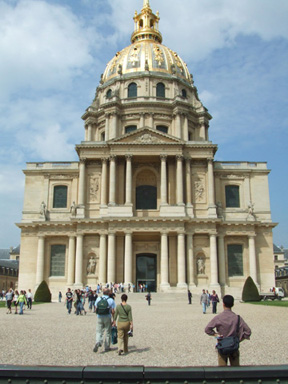
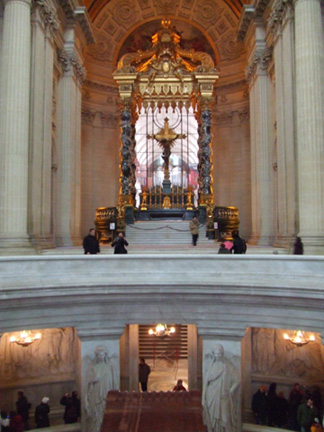
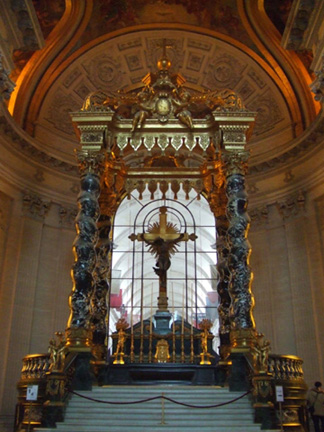
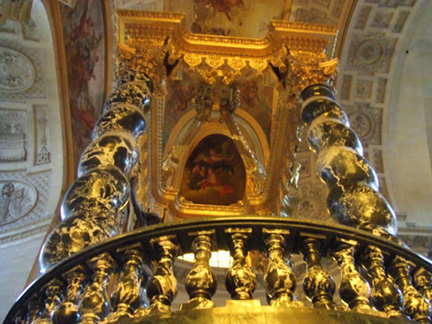
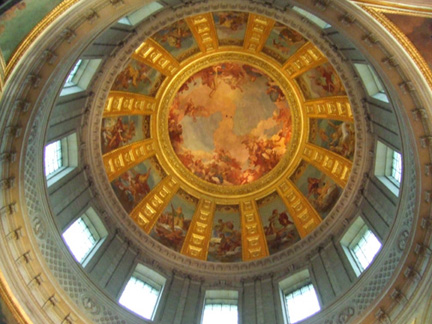
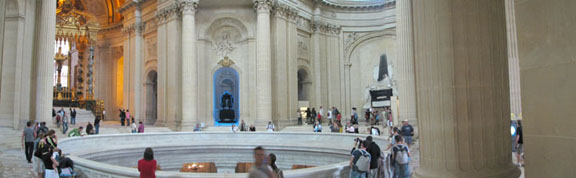
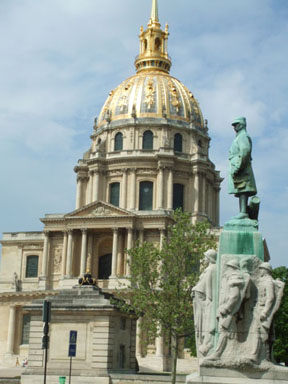
Dome Church: Tomb of Napoleon I Constructed during the reign of Louis XIV, the Dome Church is a masterpiece of French classical architecture by the renowned architect Mansart. Its columns are divided into two levels, with 40 round stone pillars elegantly framing the windows symmetrically. Above stands a gilded dome topped by a spire, reaching 107 meters above ground. In 1989, the dome was renovated and re-gilded using 12 kilograms of gold leaf, shining brilliantly under sunlight.
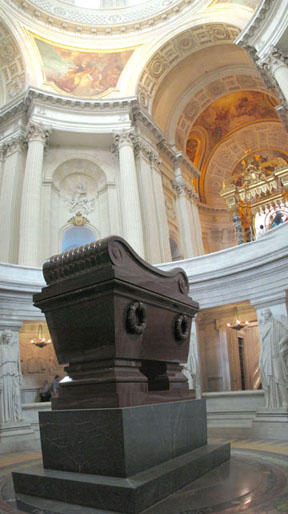
Inside the dome’s interior wall, the famous painter Charles de la Fosse painted four Evangelists. The central composition depicts Saint Louis presenting his sword to Christ, who wields it to defeat pagans. On the panel depicting French kings, we see Jouvenet’s extraordinary work featuring twelve vivid apostles.
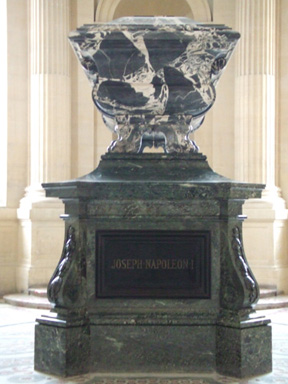
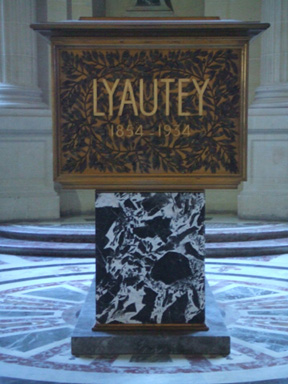
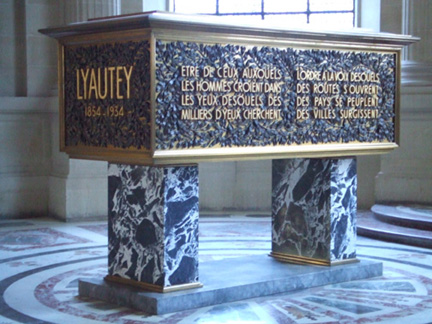
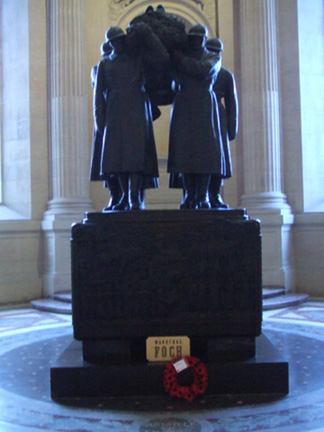
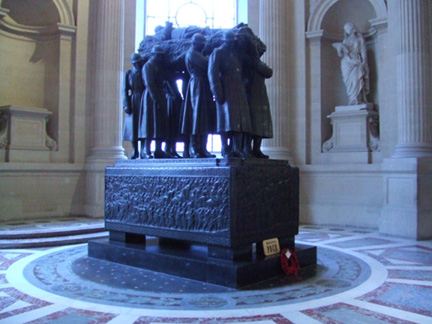
This Dome Church serves as both a cemetery for French soldiers and a shrine commemorating Napoleon, as it buries members of the Bonaparte family and several famous French marshals. Upon entering the Dome Church from the Church of Saint-Louis, the small altar on the right holds the tombs of Napoleon’s brother Joseph Bonaparte, along with those of two renowned marshals, Vauban and Foch. On the left side, the small altar contains the tomb of Napoleon’s brother Jérôme Bonaparte, adjacent to those of Turenne and Marshal Lyautey.
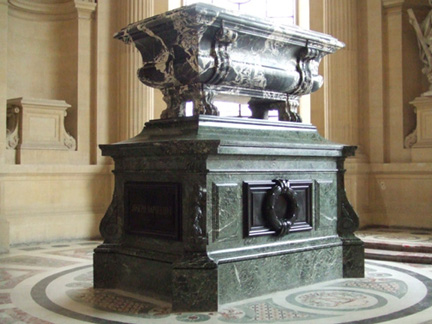
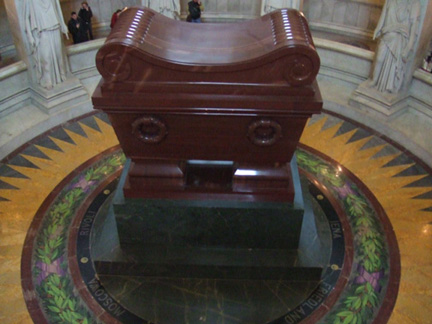
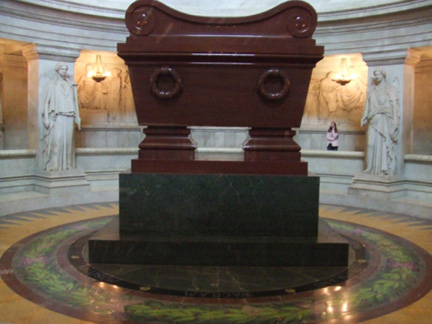
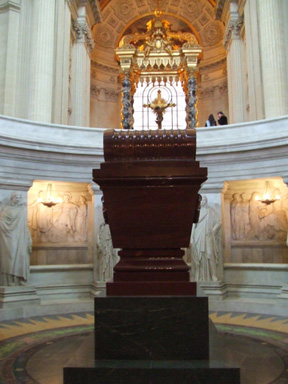
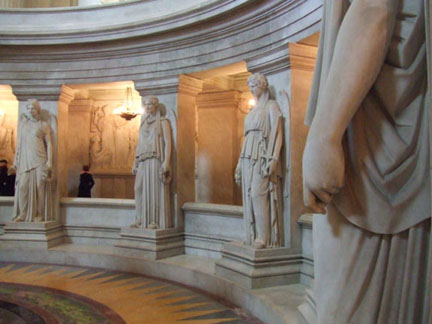
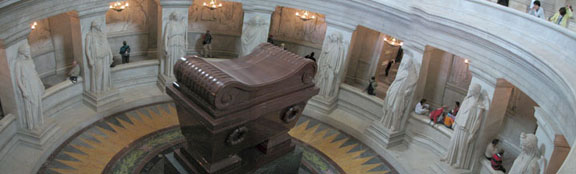
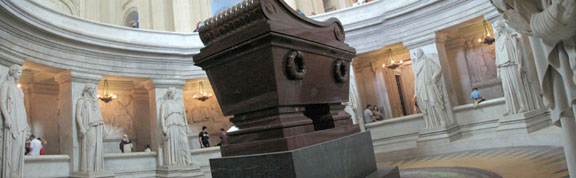
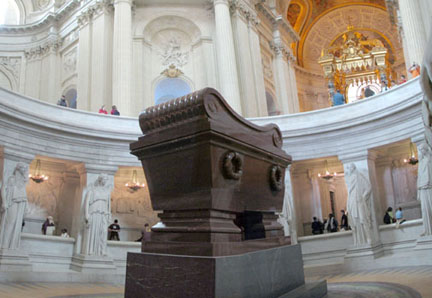
Tomb of Napoleon I Napoleon died on May 5, 1821, on St. Helena. It was not until 1840 that the French government decided to return his remains to his homeland. A state funeral was held on December 15 of that year, after which Napoleon has rested eternally in the Dome Church of the Invalides. His remains were placed in six different coffins: the first made of tin, the second of reddish-brown wood, the third and fourth of lead, the fifth of ebony, and the sixth of oak. These were then placed into a large red granite sarcophagus decorated with two garlands of laurel, set upon a green Vosges granite pedestal. The floor pattern is inscribed with the great battles of the French Empire. This is a meticulous masterpiece by the renowned architect Visconti. In this solemn and majestic burial chamber, twelve victory goddesses surround protective stone sarcophagi, accompanying the once-powerful Napoleon I.