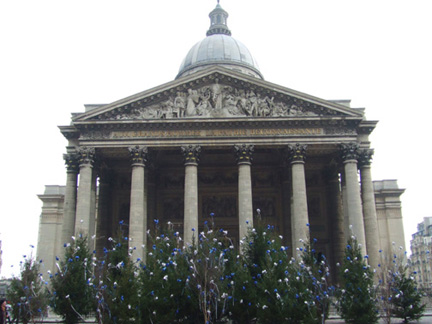
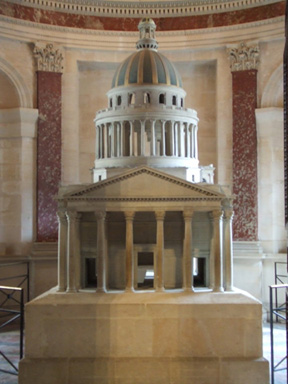
People call it the Pantheon, but the Panthéon seems more human. Located in the famous Latin Quarter, a student district full of cultural atmosphere, it has libraries and the Sorbonne Law School to its right, the Fifth Arrondissement City Hall to its left, and behind it are the famous Henry IV High School and the distinctive Saint-Étienne-du-Mont Church. The magnificent Panthéon building itself resembles ancient Greek or Roman pantheon architecture; within an elegant neoclassical style, it becomes one of Paris's most distinctive buildings and monuments.
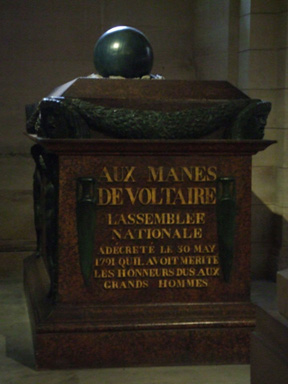
The Panthéon was a vow made by King Louis XV in 1744 after falling seriously ill in Metz in northern France: "If I recover, I will rebuild the Ste-Geneviève church to give thanks for divine protection." True to his word, he commissioned the renowned architect Jacques-Germain Soufflot to design and build a spectacular cathedral, measuring 110 meters long, 84 meters wide, and 93 meters high. Construction began in 1764 and was officially completed during the French Revolution (in 1789). In 1791, the church was closed and converted into a "Pantheon" to inter the remains of famous French figures. The first to rest there was the orator Mirabeau (though his body was removed during Robespierre's rule), followed by thinkers Voltaire and Rousseau, and revolutionary Marat (who was also removed shortly after). During Napoleon's imperial reign, it reverted to being a church, until 1885 when it became the Panthéon again, with Victor Hugo, the great French writer, as its first interment.
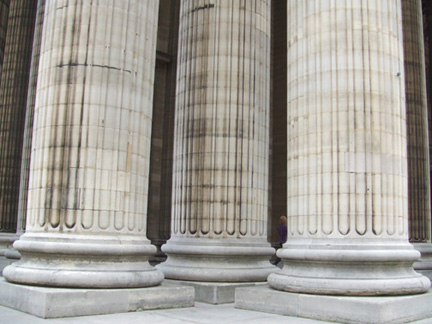
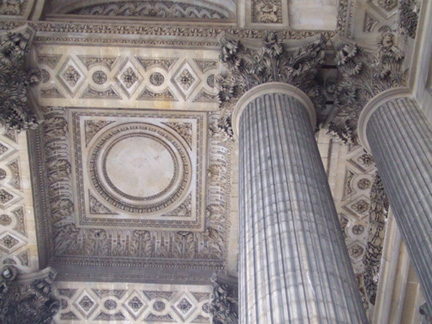
The Panthéon is a model of architecture imitating Rome's Pantheon, embodying a return to classical solemnity and sacred beauty. Its dignified front portico consists of 22 large columns arranged rigorously. It features a triangular pediment depicting the crowning of great men by the Goddess of Liberty, inscribed with "To Great Men, the Nation Gives Thanks."
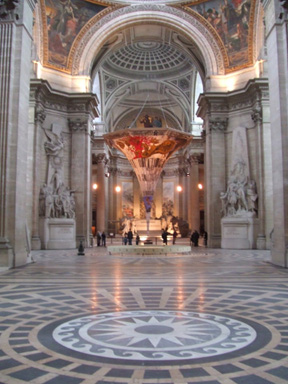
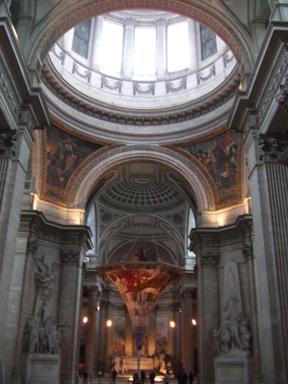
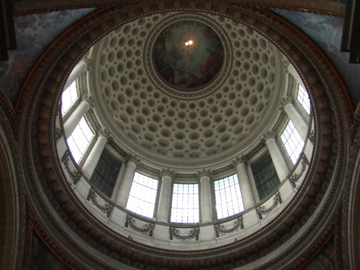
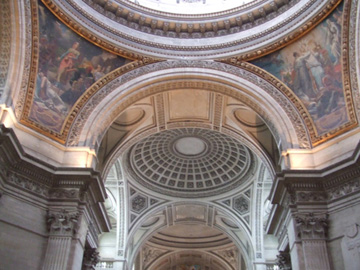
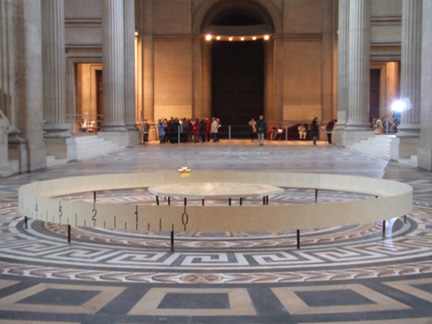
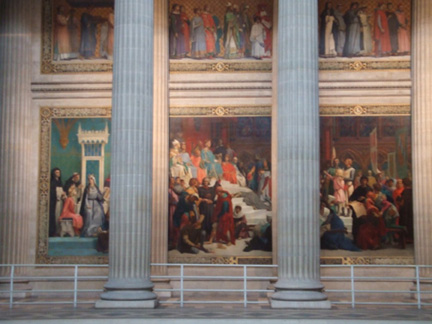
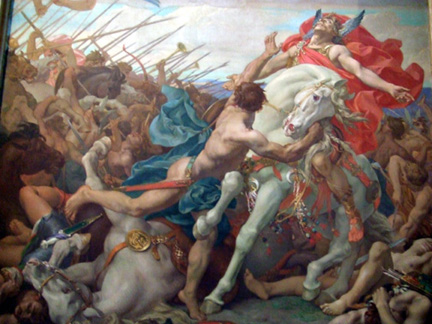
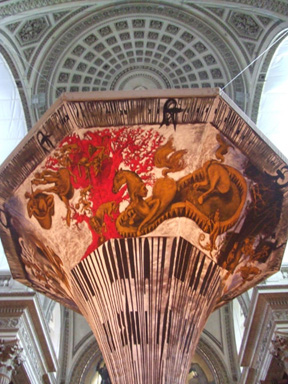
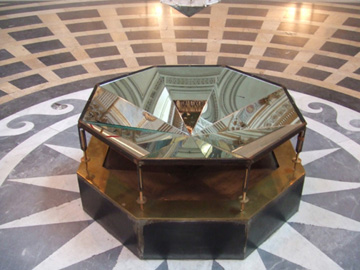
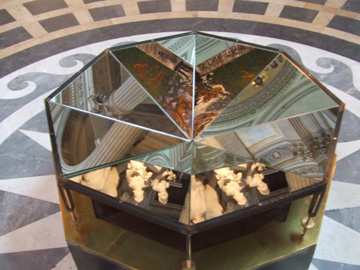
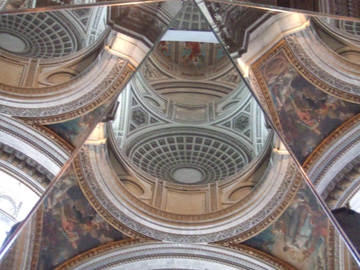
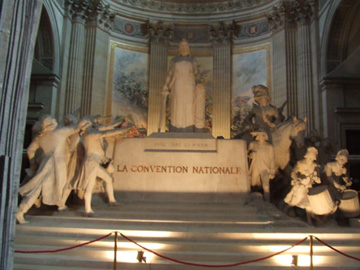
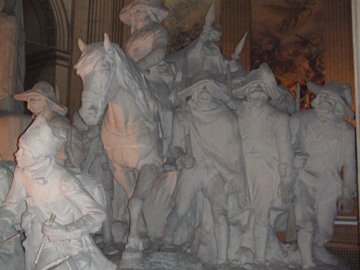
The entire structure centers on a massive dome, inspired by London's St. Paul's Cathedral. This huge dome is uniquely supported by a series of slender columns. Inside, four symmetrical wings form a Greek cross intersecting at the center beneath the dome, supported by four giant columns. Each thick column weighs 10,000 tons, an unimaginable feat. Under the solemn and sacred expanse of the dome hangs a distinctive Foucault pendulum, with a massive hammer swinging back and forth. The walls of the surrounding wings feature splendid frescoes depicting stories of wise French kings and Saint Genevieve. The most famous among these are scenes from the life of Saint Genevieve on the right wing, masterpieces by French Symbolist painter Pierre Puvis de Chavannes. Various statues commemorating French celebrities or battles stand in the corners.
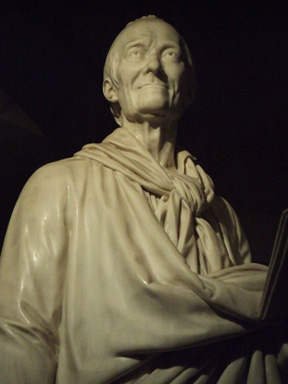
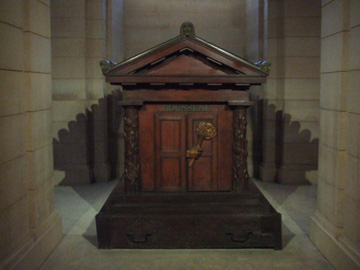
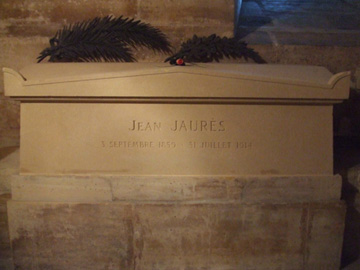
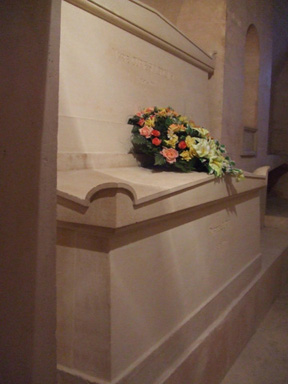
The true resting place of the Panthéon is in the basement, where orderly arcades form square crypts. Almost all significant figures and great men lie here, regardless of their field, provided they contributed to France or humanity: politicians, generals, writers, thinkers, scientists, architects, resistance fighters, etc. Thinkers like Rousseau face Voltaire; a vivid statue of Voltaire contemplating human freedom and democracy is a masterpiece by sculptor Houdon. Also buried here are the building's architect Soufflot, followed by generals such as Lannes, Lazare, and Marceau; political commentators such as Gambetta, Jean Jaurès, and Éboué; writers such as Hugo, Émile Zola, and André Malraux; Victor Schœlcher, who abolished slavery in France; physicists such as Jean Perrin and Paul Langevin; Nobel laureates Pierre and Marie Curie, and others worthy of admiration.