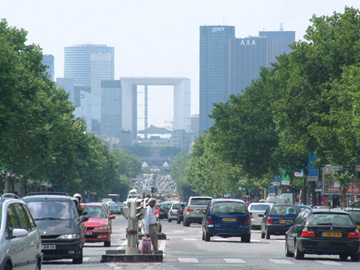
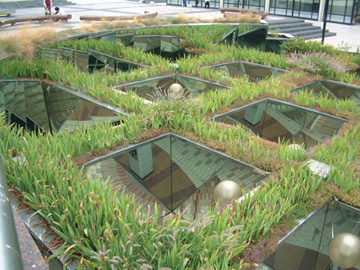
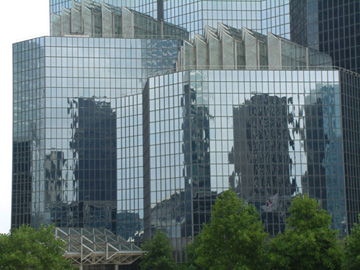
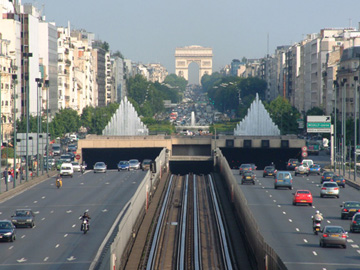
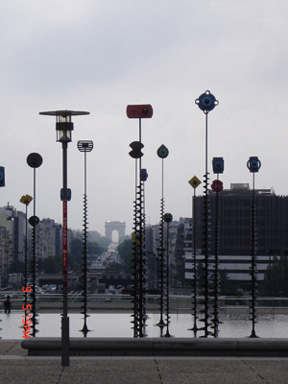
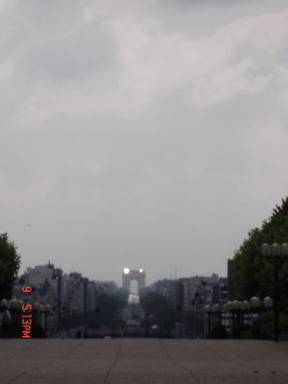
Located in the western suburbs, Paris’s “Little New York” lies on a straight line with the Champs-Élysées and the Arc de Triomphe. Looking west from the Arc de Triomphe, you see a forest of skyscrapers; this is the La Défense district. “La Défense” is a transliteration, but its true meaning is “Defense.” It is a masterpiece of post-war urban development, planned since 1958. On an area of 800 hectares, it has become the most modern metropolitan landscape in the Paris suburbs and Europe’s most avant-garde business district, hosting almost all major multinational corporations. The entire area is uniquely built on a platform where no cars are visible, as the transportation system is entirely underground.
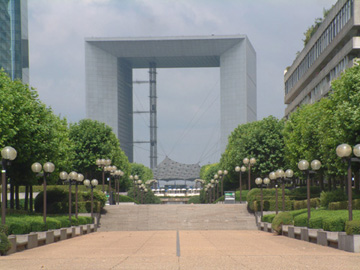
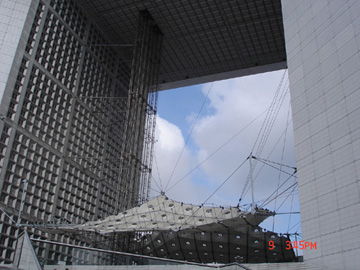
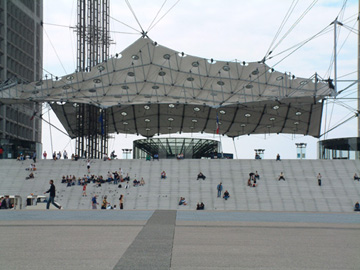
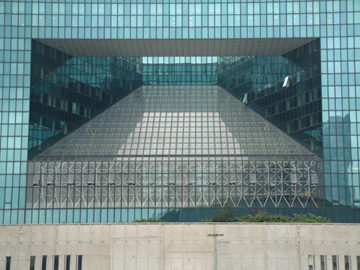
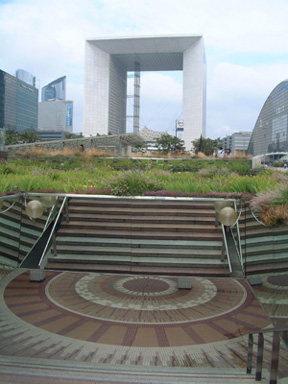
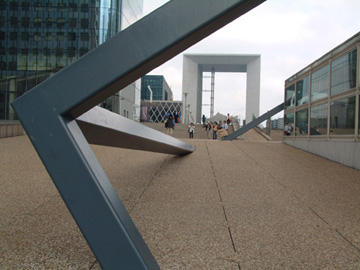
At its core stands a magnificent, minimalist structure: the Grande Arche (105 meters high), known as the “New Arc de Triomphe.” This hollow cube, large enough to contain Notre-Dame Cathedral, features a massive canopy resembling a “cloud” suspended in mid-air. Completed in 1989, it is the work of Danish architect Otto von Spreckelsen and represents the most modern monument in contemporary Paris, comparable to I.M. Pei’s Louvre Pyramid. Both were part of former President Mitterrand’s ambitious “Grand Projects.”
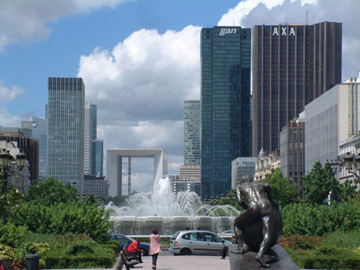
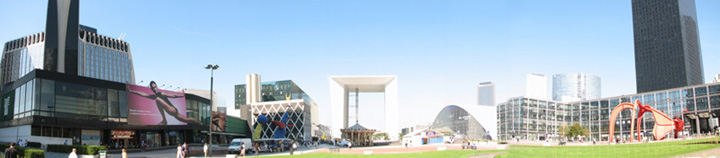
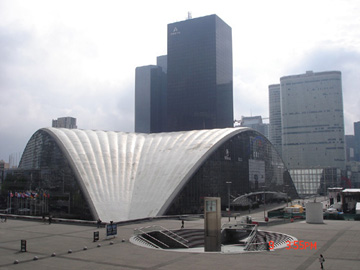
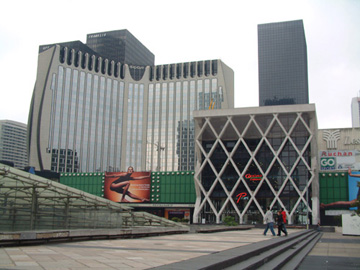
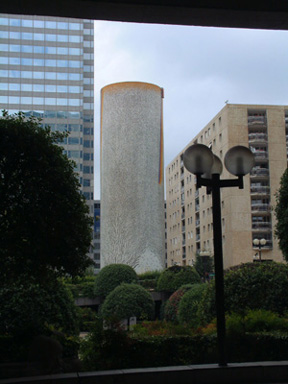
These new skyscrapers surround the wide square, spreading outward. To the left of the Grande Arche is the Palais de la Défense (the C.N.I.T. International Exhibition Hall), France’s National Center for Industry and Technology. Built in 1958, it is the oldest and most original building, designed by architects Zahrfuss, Camelot, and de Mally, and hosts various trade shows annually. To the right is the Four Seasons Shopping Center, featuring over 200 shops, restaurants, and cinemas. The first tower, Tour Roussel-Nobel, was completed in 1967. Today, more than thirty modern buildings stand here, including Tour Elf, Tour Fiat, Tour Gan, and Tour Manhattan. The Tour Fiat, at 45 floors (178 meters), is the tallest, justifying the nickname “Little New York.”
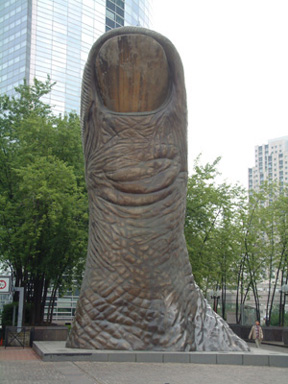
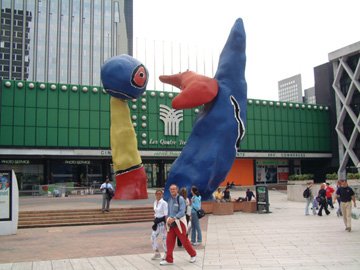
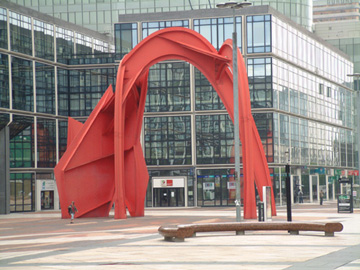
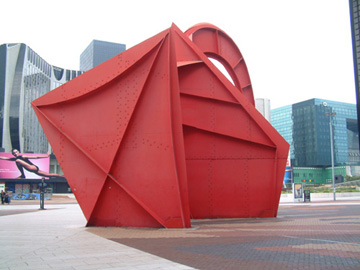
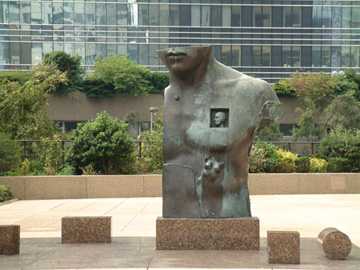
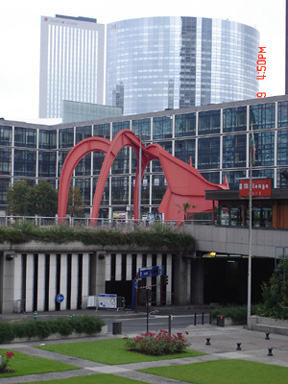
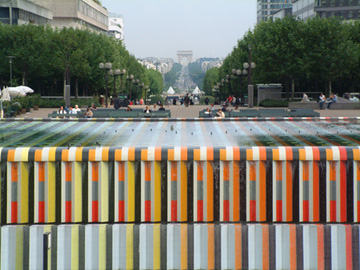
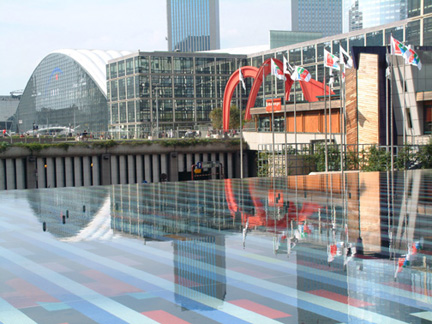
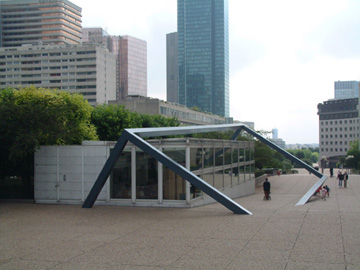
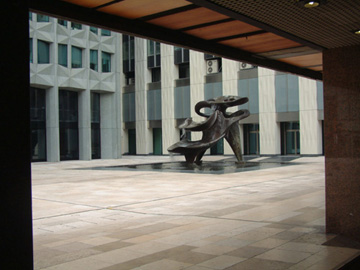
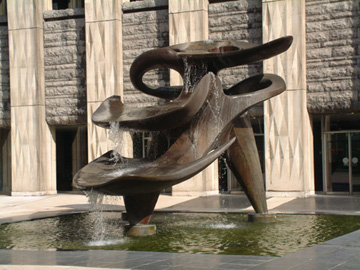
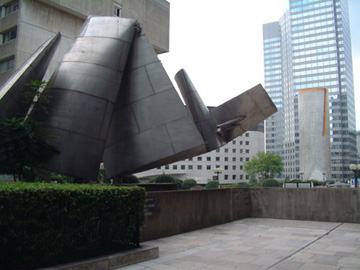
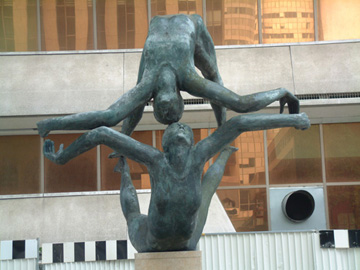
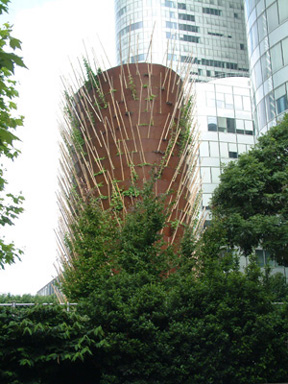
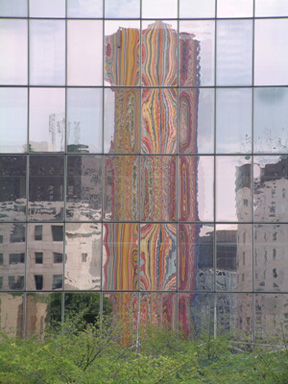
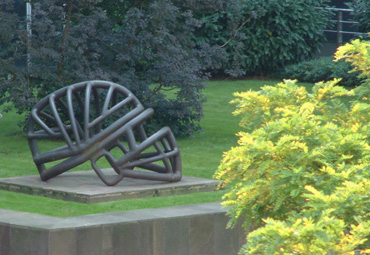
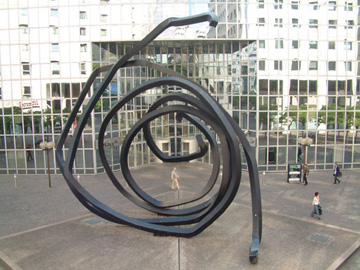
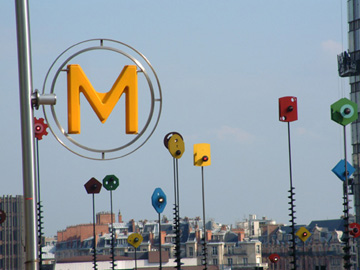
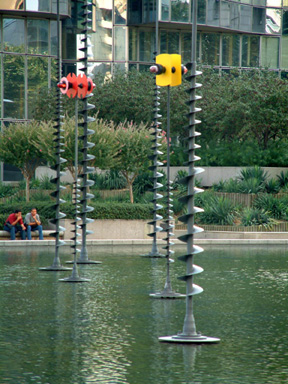
The square and areas beneath the skyscrapers host numerous modern public artworks. In front of the shopping center is Joan Miró’s monumental sculpture Two Figures (1978). Opposite it stands a 15-meter-high red memorial sculpture by American artist Alexander Calder. Nearby is an innovative fountain basin by Israeli artist Yaacov Agam, which dances to music in summer. A large, minimalist geometric sculpture adorns a building, created by French artist François Morellet. Other works include Venat’s giant vortex sculpture, Takis’s kinetic sculptures, and César’s dramatic neo-realist thumb sculpture, making the area a garden of modern sculpture.