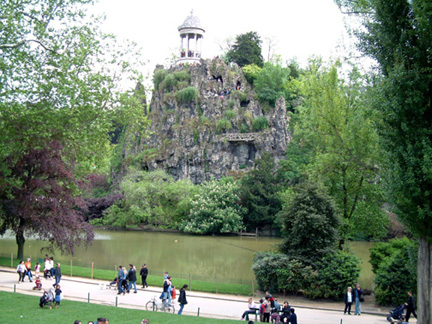
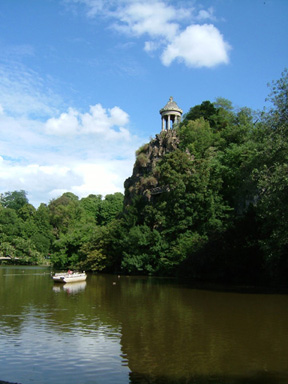
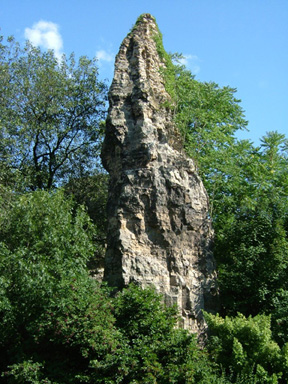
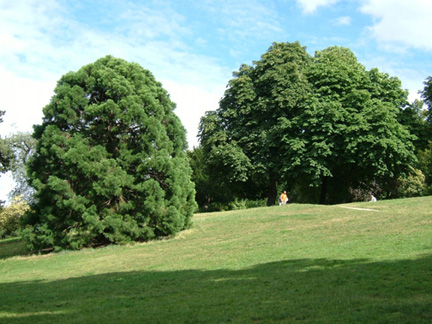
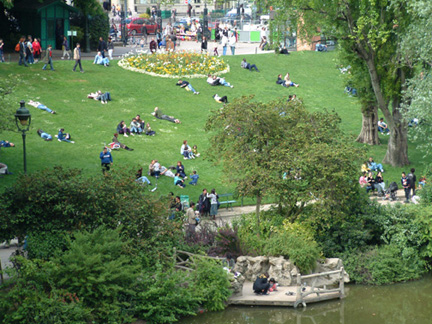
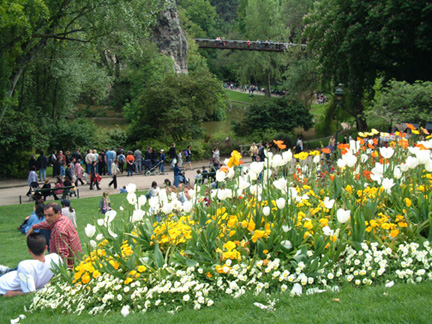
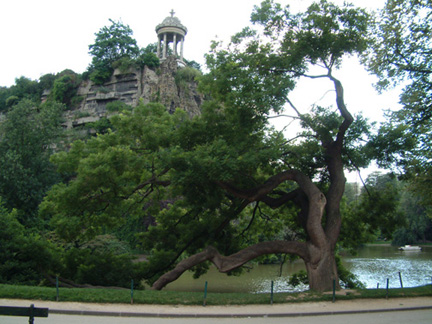
This picturesque park is the most exemplary English-style garden in the capital at the end of the 19th century, with bright natural scenery and lush trees that appear full of vitality. The peculiar, towering cliffs and hills resemble the magnificent Alps. No one would have guessed that this place was once an important quarry since the 18th century, and later became Paris's garbage dump. It was not until the Second French Empire, when Napoleon III’s wise policies promoted the modern metropolis plan for Greater Paris, that Baron Haussmann and landscape expert Alphonse transformed the dirty garbage dump into an unbelievable botanical monument. Its majestic momentum and charm are naturally formed, becoming a green oasis on the northeast side of the capital.
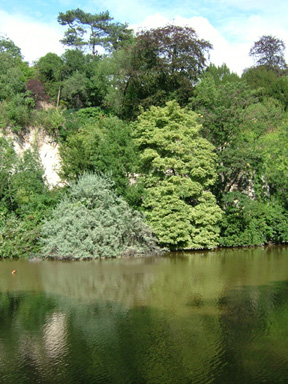
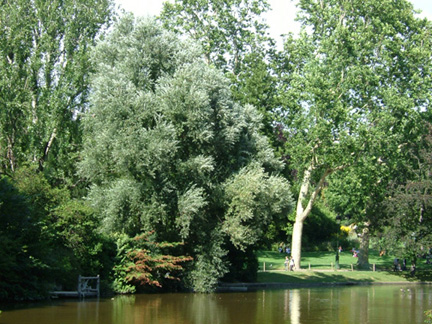
This picturesque park, with its clear waters and lush scenery, is the most exemplary English garden in Huadu from the late 19th century, featuring a poetic and idyllic landscape centered around bright lakes.A love god's hall on a peculiar and towering cliff, along with the shimmering reflections on a lake, compose the transcendent atmosphere of Chinese landscape painting.A picturesque and majestic natural landscape, it stands as the most extraordinary example of a British garden in Huadu.The lush greenery by the lake exudes vibrant vitality, resembling a utopian paradise.The cliff scenery in the hilly terrain, with a fresh and novel appearance, seems to be a natural landscape scene of the Alps.The lush, verdant forested gardens of the rear mountain, shaped by nature's creation, present a scene as exquisite and picturesque as a landscape painting at every turn.On sunny and breezy days, the sloping grasslands become a leisure space and backyard for city dwellers.With its seasonal flower beds adding charm, the picturesque park has become a leisurely stroll destination for Parisians.Its majestic and magnificent aura, naturally formed, has now become a lush green oasis on the northeast side of the city.