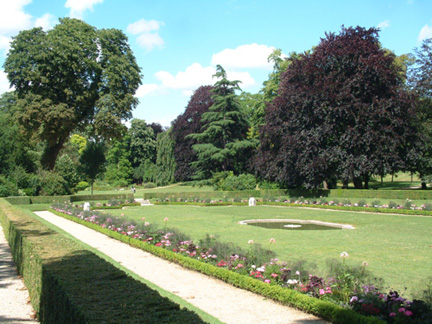
The Parc de Bagatelle, a lush and tranquil garden, is the most exquisite and enchanting among the royal gardens of the capital. Its charming rose garden is well-known throughout Paris. Located on the right side of the dense Boulogne Forest in western Paris, it faces the winding Seine River. Whenever people in the city speak of the captivating roses, they immediately think of the mesmerizing and vibrant rose garden at Bagatelle. It is the most fragrant garden in the capital, embodying classical romanticism with poetic beauty and aesthetic charm everywhere, like an earthly Eden. The colorful and beautiful landscape, with its harmonious and perfect diversity, is divided into four distinct thematic types: the rigorous and perfect French classical garden (including the charming rose garden), the natural English garden, the picturesque vegetable garden, the artistic iris garden, and the lotus pond with shimmering reflections. Through its multiple forms, volumes, changing light, and diverse visual aesthetics, it has become the most unique garden in the capital, an indispensable vibrant park for flower enthusiasts.
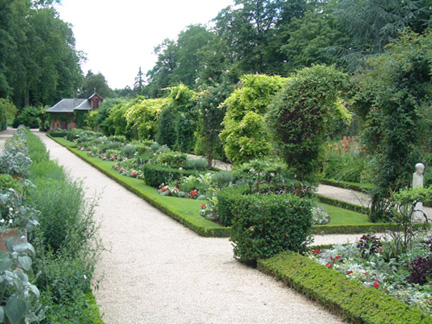
The origin of this vibrant garden dates back to the early 18th century when General Estrees built a small villa in the dense Boulogne Forest as a gift for his beloved wife. Later, it was renovated into a luxurious small castle named Bagatelle (the origin of the name), which became a paradise for noble banquets and leisurely gatherings. In 1775, it was purchased by the Duke of Artois (future Charles X), brother of Louis XVI, who commissioned the famous architect Belanger to rebuild a more luxurious and beautiful castle within just sixty days. Simultaneously, under the ingenious design of the renowned British horticulturist Blaikie, a poetic Chinese-English style garden was created, marking the origin of Bagatelle’s vibrant landscape.
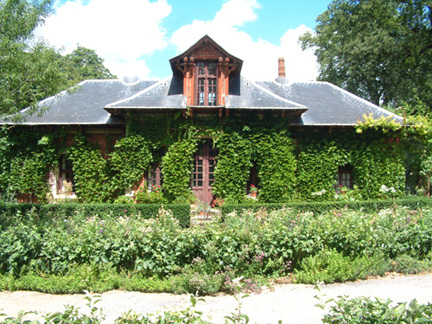
During the French Revolution, it escaped destruction and was confiscated. In 1797, it regained its former glory, becoming Napoleon’s hunting lodge, with plans to establish an imperial Roman palace there. After the restoration of the monarchy, it returned to the property of the Duke of Artois’ family. In 1835, it was acquired by Lord Seymour, who further updated Bagatelle, expanded the vibrant garden, and added an orangery and stables. Later, his son Sir Richard Wallace added the Trianon and two guard towers. By the 19th century, it had become the magnificent garden of Napoleon III.
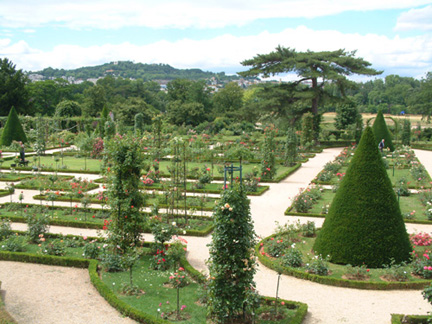
In the early 20th century, the government sold it to the City of Paris. Renowned horticulturist J-C Forestier then revitalized Bagatelle with innovative designs, updating the Chinese-English garden. He created the famous rose garden, the enchanting iris garden, and the lotus pond—a water plant garden. This made Bagatelle more refined and perfect, imbued with sensibility, and radiating the brilliance of garden art, completely renewed. The vibrant garden attracts thousands of visitors from around the world every year, including flower enthusiasts and those who love roses. Thus, it has become part of the aesthetic life of contemplation and appreciation of art in the metropolis.