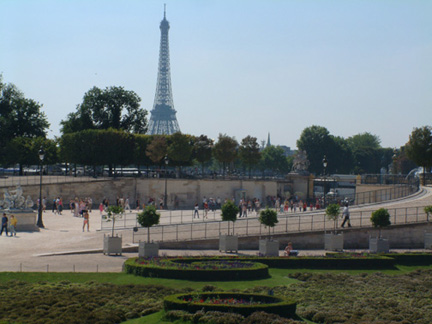
The Jardin des Tuileries, a lush garden of flowers and trees, enjoys a unique location at the very heart of Paris. It serves as the forecourt to the world-famous Louvre Museum. As the most prestigious royal garden in the capital, it is also the largest. Stretching nearly one kilometer from the majestic Arc de Triomphe du Carrousel to the bustling Place de la Concorde, its scale expands further if the grand avenue of the Champs-Élysées is considered an extension of the garden (it was originally part of the Tuileries complex), creating an oasis amidst the city's noise. This harmonious and perfect garden, imbued with deep French historical sentiment, presents a rigorous, symmetrical geometric form that exhibits an exquisite sense of balance, pleasing to the eye. It is an ideal place for Parisians and pilgrims of the art capital to stroll, reflect, romance, and enjoy nature.
History and Anecdotes: This exquisite and perfect French garden was established by Queen Catherine de' Medici in the mid-16th century when she built the Tuileries Palace to connect the Louvre into a closed court complex. With the collaboration of French gardener Pierre Le Nôtre (father of the famous landscape architect André Le Nôtre), Bernard Palissy, and Italian gardeners Carnessequi and Tarquin, it was developed into a magnificent Italian Renaissance-style noble garden. Upon completion, it quickly became a space for royal recreation and leisure.
During the reign of Louis XIV in the 17th century, Prime Minister Colbert commissioned the King’s chief gardener, André Le Nôtre, to renovate the grounds. Through his ingenious craftsmanship, it became the most typical French garden in the capital. He created grand avenues, rigorous symmetrical flowerbeds, a shimmering large reflecting pool, and long narrow terraces on both sides, making this garden the most perfect in Paris.
In the 18th century, the garden was expanded again for public recreation. On sunny summer days, the side near Rue de Rivoli becomes a temporary amusement park for Paris, featuring carousels, space ships, go-karts, and other attractions that draw thousands of visitors; these activities have become an annual tradition in Paris.
However, during the French Revolution, the Tuileries became a bloody battlefield, with the Louvre surrounded by revolutionary troops. On August 10, 1792, King Louis XVI and the royal family fled hastily, leaving the Tuileries Palace and its beautiful gardens behind forever. Nearly half of the royal guards perished, their blood staining the Tuileries grounds; the horrific scene remains chilling to recall. Meanwhile, the Tuileries Palace was destroyed by fire, becoming the open-structure Louvre we see today. Following the success of the revolution, a grand celebration was held in the garden on June 8, 1794.
In the mid-19th century, orange museums were built on the terraces facing the busy Place de la Concorde (in 1861), and ten years later, the Tennis Court Gallery was constructed, forming the current appearance of the site.
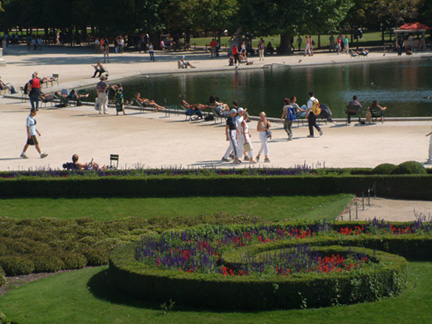
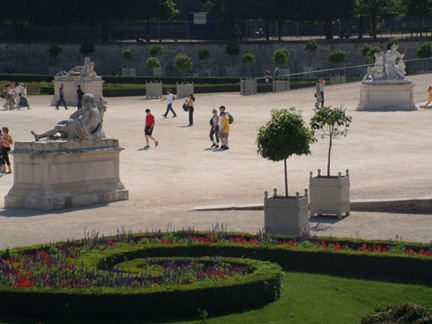
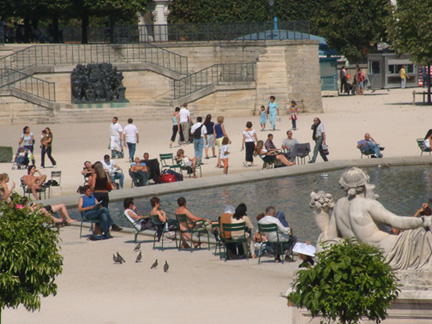
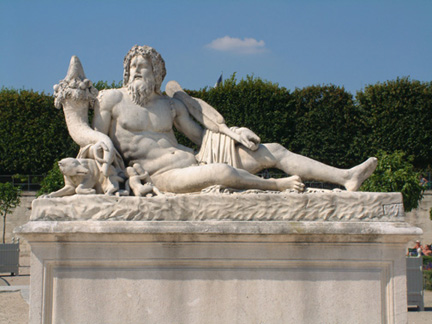
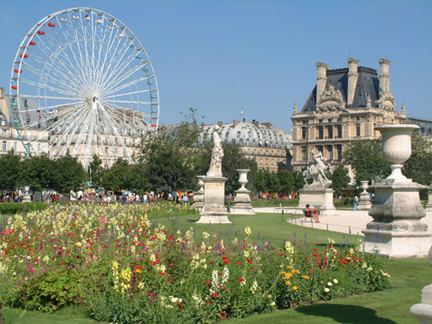
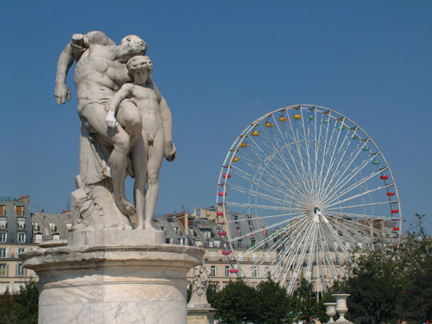
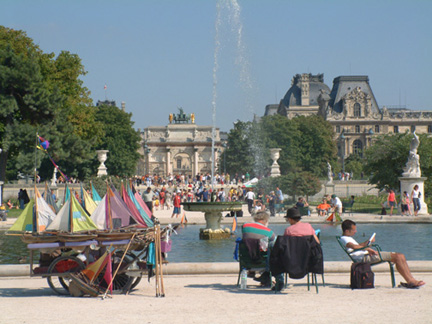
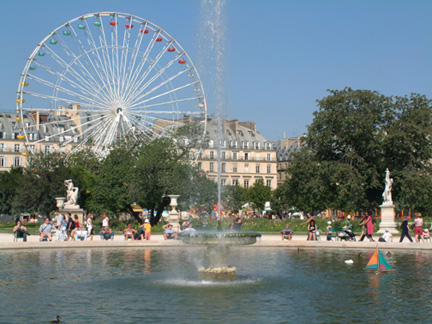
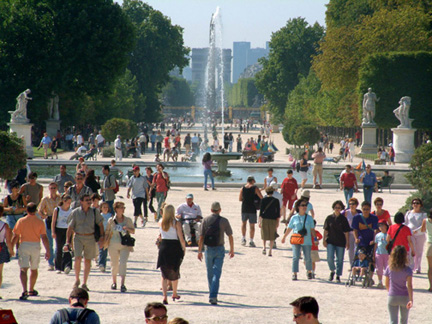
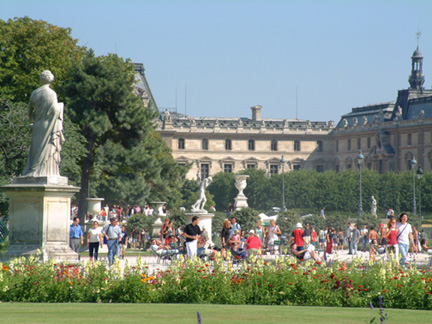
The Tuileries Garden stretches for nearly a kilometer from the Arc de Triomphe du Carrousel to the bustling Place de la Concorde, serving as an oasis amidst the city's clamor and offering a distant view of the Eiffel Tower.Entering the garden from the gilded railings of Concord Square, the octagonal large water mirror, embraced by high platforms on both sides, reflects shimmering light and shadows, becoming another core of the garden.The octagonal large water mirror is surrounded by noble classical statues and vibrant green floral gardens.The large octagonal water mirror is a favorite spot where pilgrims often lean back to enjoy a moment of tranquility, and it is also a grand courtyard for Parisians.The Tuileries Garden is a classical and modern outdoor sculpture garden, where grand and imposing ancient Roman statues often adorn the edges of its reflecting pools.
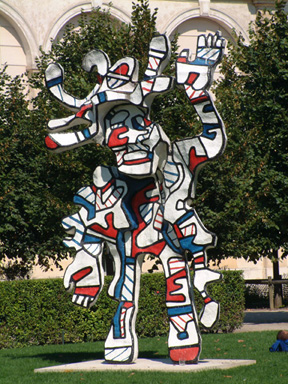
On the tree-lined path and green lawn between the high terrace and the circular reflecting pool lies Paris’s most avant-garde modern sculpture garden. On the right high terrace stands Jean Dubuffet’s Bel Cost (1973), a humorous statue by the French artist.
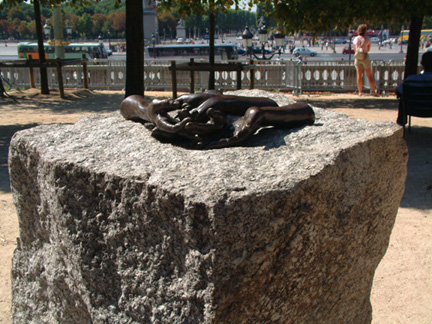
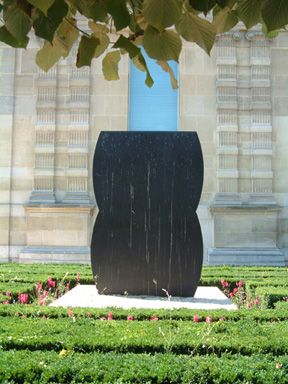
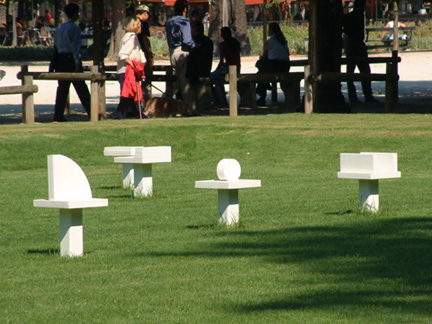
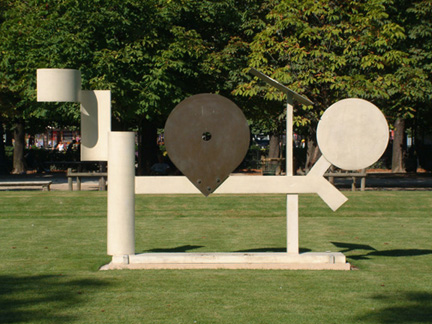
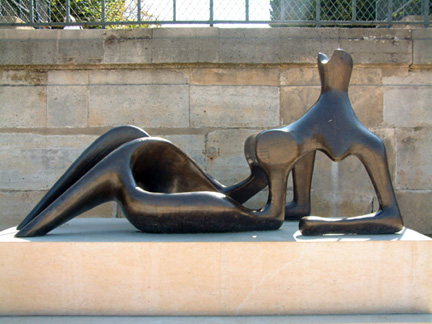
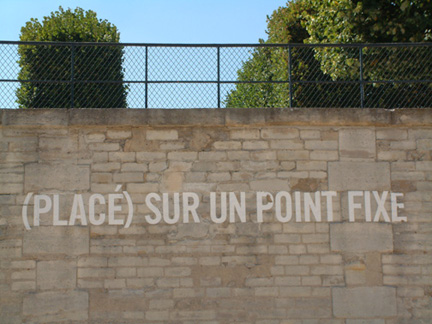
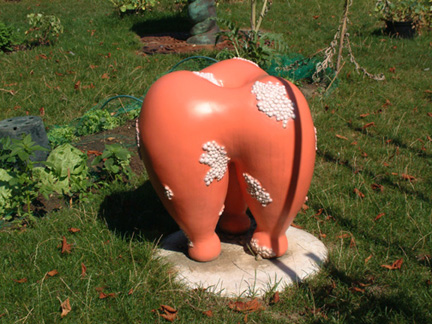
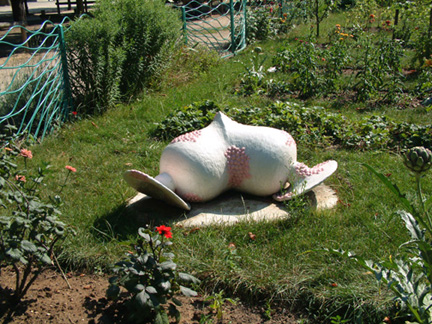
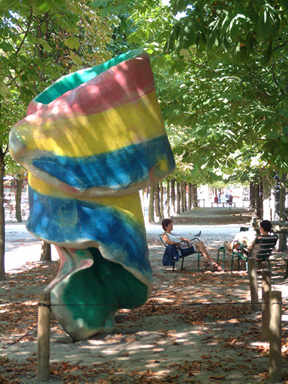
On the platform, the American-French artist Louise Bourgeois, vigorous in her old age,(Louise Bourgeois)'s welcome arrival( The Wel Coming hands)of a groundbreaking series,( 1998 year's work)。The American artist Claes behind the Tennis Art Museum(Ellsworth Kelly) 's organic minimalist abstract (Untitled)sculpture(1988 year work)。On the green lawn, Kexili, who lived in France and then moved to New York, USA(Alain Kirili)'s White Major Commandments(Grand Commandement )Abstract Series(1986Year of Creation)。On the green lawn, American abstract sculptor David Smith(David Smith 1906-1965) piano 2( Primo piano II)a rigorously symmetrical sculpture( 1962year work)。The British sculptor Moore in the stairwell of the left platform(Henri Moore 1898-1986)in a reclining figure between figurative and abstract figure(Figure Couchee)(1951year's work)。On the wall of the side platform,American conceptual artist Lawrence Whinney(Lawrence Weiner) using written text,to present metaphysical sculpture(1992 Year of work)。French female sculptor Anna in the small garden Roclet(Anne Rochette) Sexually charged nursery rhymes(Comptine)Painted Object Sculpture Series(1999Yearly Works)。French female sculptor Anna in the small garden Roclet(Anne Rochette) Sexually charged nursery rhymes(Comptine)Painted Object Sculpture Series(1999Yearly works)。
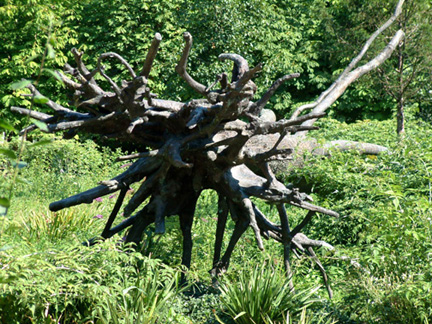
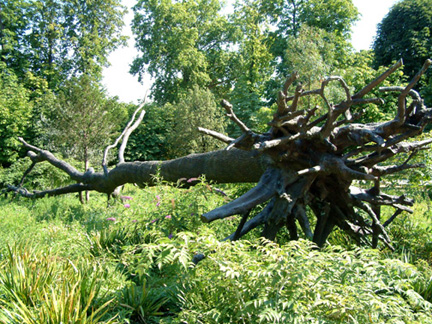
In the garden, Giuseppe Penone’s imaginative work Arbre des Voyelles (2000) features a massive tree lying on the ground.
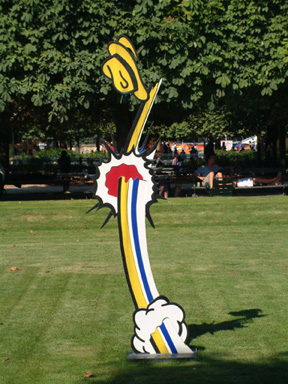
In Lin Yuanzhong, the ItalianPoverty artist Giuseppe Penone's imaginative work 'Abre des Voyelles' (2000) features a massive tree lying on the ground.D CabanesDecorative painted swirl carvings。On the green lawn, the renowned American Pop artist Roy Lichtenstein(Roy Lichtenstein)'s appreciation of(Coup du Chapeau)his humorous and witty sculptures(1996from the year)。
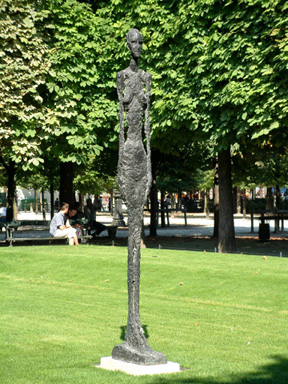
On the green lawn, Alberto Giacometti (1901–1966), the French existentialist sculptor, presents Grande Femme II (1960), a solitary and helpless figure.
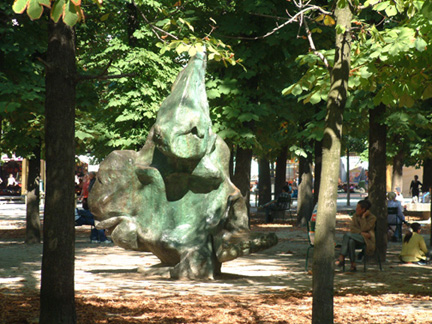
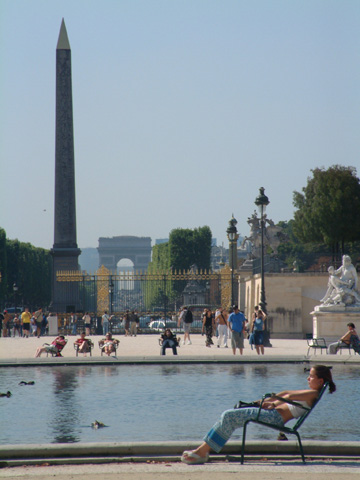
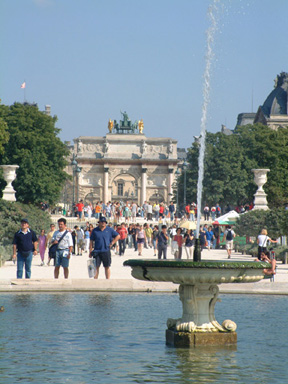
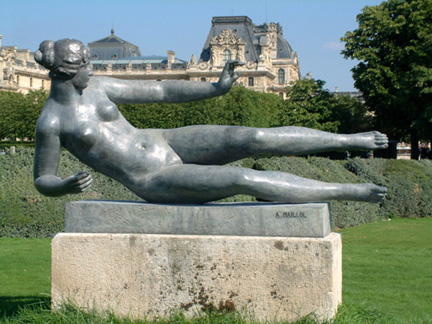
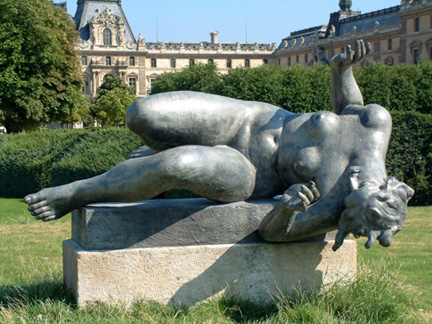
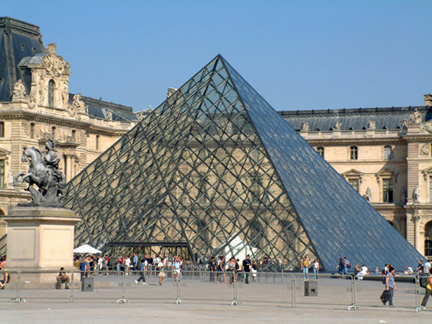
Under the tree-lined path, Swedish artist Dietmann, who resides in France(Erick Dietman)humorous and satirical friendless( L ami de personne)statue(1992year created)。On a sunny summer day, the gardens of the Tuileries along Rue de Rivoli served as a temporary playground for Parisians.The Tuileries Garden, on a sunny summer day along the Rue de Rivoli, served as a temporary playground for Parisians.The Tuileries Garden is another grand courtyard or backyard for Parisians, and a must-visit spot for tourists.The Tuileries Garden is another major courtyard or backyard for Parisians, and also a must-visit spot for tourists.The Tuileries Garden is another major courtyard or backyard for Parisians, and a must-visit spot for tourists.The Tuileries Garden is another grand courtyard or backyard for Parisians, and a must-visit spot for tourists.From the front of the Tuileries Garden, one can see the pink Egyptian obelisk at Place de la Concorde and, further in the distance, the Arc de Triomphe.Viewing the Arc de Triomphe du Carrousel from behind the Tuileries Garden at the circular water path, extending to the distant Louvre.Passing through the gilded railings of the Tuileries Garden, one enters the verdant, evergreen Jardin de la Fontaine Cauchard, where numerous works by French sculptor Aristide Maillol depicting sensual nude women are displayed. This is named after the gentle “River.”This dynamic masterpiece is titled 'Mountain'. Both are among Mayor's finest works.Visiting the Tuileries Garden, passing through the Arc de Triomphe du Carrousel, and arriving at the pyramid entrance of the Louvre Museum.