Château de Fontainebleau

Gardens of the Château de Fontainebleau

Among French royal palaces, the Louvre and Versailles are well-known, while the Château de Fontainebleau seems more unfamiliar to us. However, with a slight knowledge of French history, one will recall that Francis I, Henry II, Henry IV through Louis Napoleon—32 kings and queens in total—once lived or stayed here. The castle has staged eight centuries of French history; visiting it guides us into the core of that history.

Located southwest of Greater Paris, between the Seine and the Marne rivers, surrounded by forests and marshes (currently the largest forest area in Greater Paris) and adjacent to the famous Barbizon, Fontainebleau is renowned for its magnificent castle and as a site of the French Renaissance. From the early 12th century, Louis VI frequently hunted here and built a simple hunting lodge. During the reign of Louis VII, a small chapel was added; under Louis IX (Saint Louis), the castle and monastery were expanded, remaining a royal hunting base until the late 15th century. When Francis I returned victorious from conquering Madrid in 1527, he decided to make Paris his capital. On the old site of Saint Louis’s castle, he commissioned architect Le Breton to plan a new Roman city and specifically invited Italian painters Rosso Fiorentino from Florence and Primaticcio from Rome to decorate his castle, creating a completely new Renaissance-style palace. Within this refined Mannerist style, the "School of Fontainebleau" painting was born.
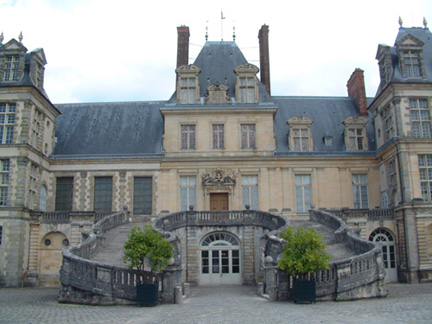
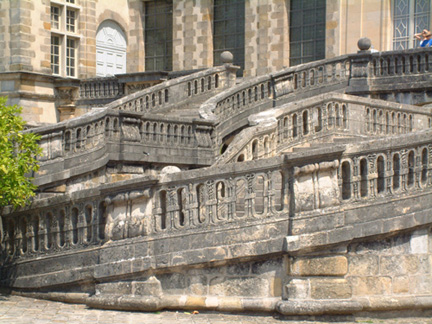
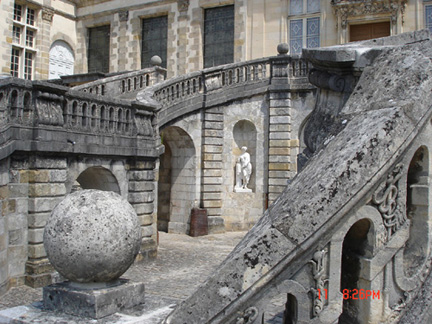
楓丹白露宮以其城堡正面白馬庭院的迴旋對稱樓梯聞名, 這是文藝復興最漂亮及最具代表性的一座樓梯。
The Palace of Fontainebleau is renowned for its spiral staircase in the Cour du Cheval Blanc, which fronts the castle; it is one of the most beautiful and representative staircases of the Renaissance.
宏偉壯麗的弧形流線造型的樓梯,充滿法蘭西的歷史情感。
The grand, sweeping curved staircase is imbued with a sense of French historical emotion.
樓梯下面別開生面的璧窿裝飾著詩情畫意的維納斯雕像,是人們意想不到的。
The niche under the staircase features a poetic and picturesque statue of Venus, an unexpected delight.
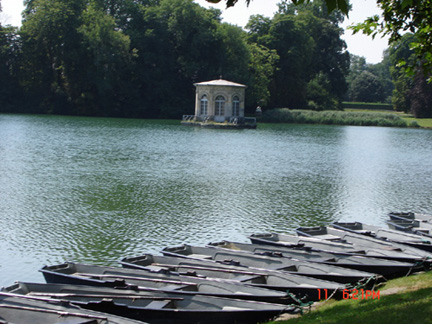
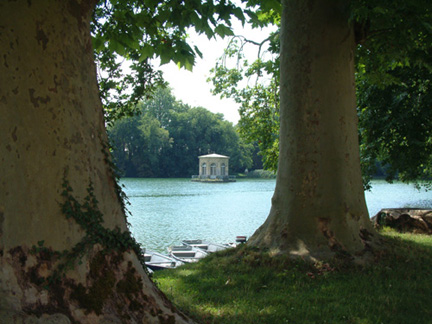
鯉魚池是楓丹白露宮庭園最詩意的地方,也是夏天遊湖戲水的好去處。
The Carp Pond is the most poetic spot in the gardens of the Palace of Fontainebleau, and an ideal place for boating and swimming in summer.
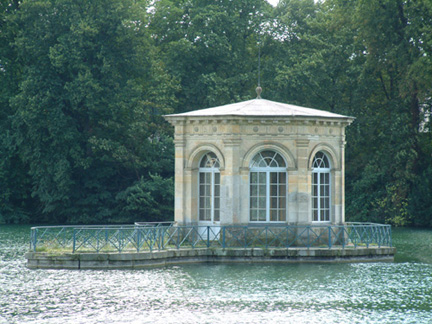
水光幻影的鯉魚池,以湖中這座別開生面的別館為核心,宛若愛情島。
The shimmering carp pond, centered around this uniquely designed pavilion in the lake, resembles an isle of love.
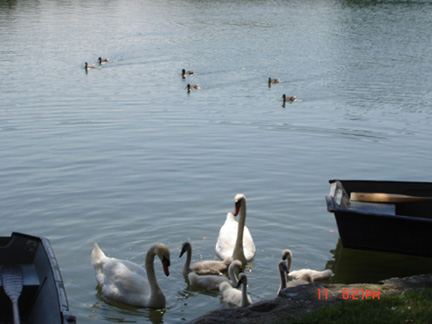
如詩如畫的湖上,少了野鴨及天鵝將失去自然應有的本色。
The lake, picturesque as a poem, would lose its natural essence without wild ducks and swans.
沉醉在這美好的景色下,所有的文字形容詞都是多餘地。
Intoxicated by this beautiful scenery, all descriptive words are superfluous.
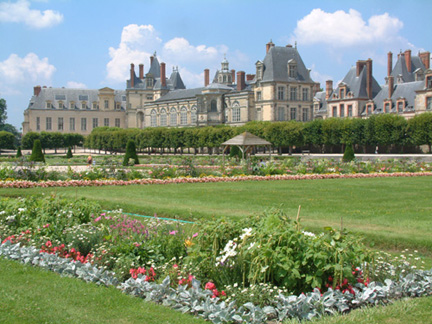
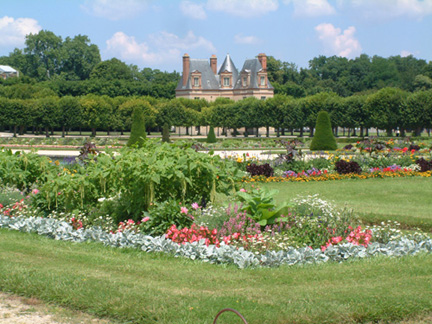
城堡後面是謹嚴幾何圖形花圃,是所有法國園林中最大的一座。
Behind the castle lies a meticulously geometric garden, the largest of all French gardens.
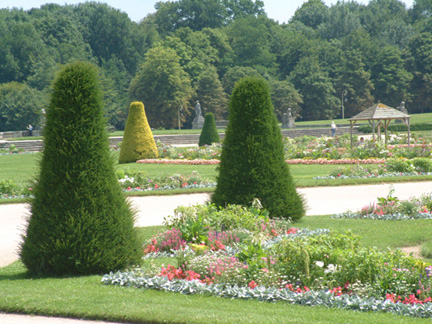
幾何圖形花圃四週邊飾有季節性花草,夏季禮讚時五彩繽紛,讓人眼花撩亂。
The geometric flower bed is adorned with seasonal flowers and plants around its perimeter, bursting with vibrant colors during the summer celebration, dazzling to the eye.
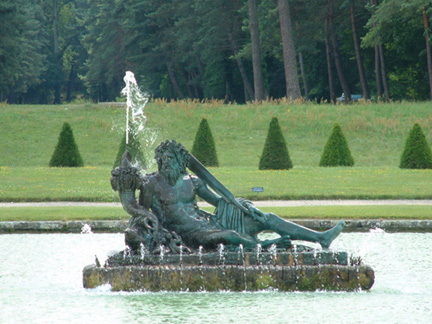
整座幾何圖形花圃以宏偉壯麗的海格利斯雕像噴泉為核心。
The entire geometric flower garden is centered around the magnificent Hercules statue fountain.
風和日麗時將自然以五顏六色彩繪大地的時刻,絢麗季節性花圃就是明證。
On sunny and breezy days, nature paints the earth in vibrant colors, as evidenced by the dazzling seasonal flower beds.
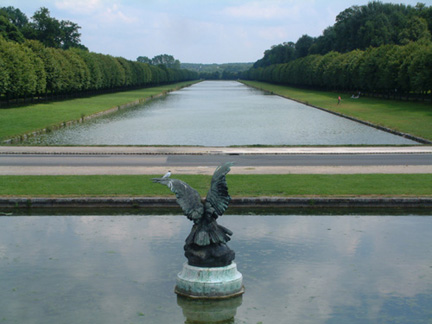
楓丹白露宮庭院是法國園林巨匠勒諾特晚年的傑作之一, 幾何圖案花圃及長達一公里的運河都是法國園林最佳的表現。
The courtyard of the Palace of Fontainebleau is one of the late masterpieces of French garden architect Le Nôtre, with its geometric flower beds and one-kilometer-long canal representing the finest expression of French gardens.
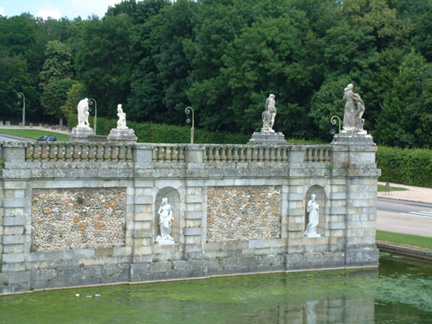
運河前由別開生面半圓形觀席台梯樓兩側聳立著迷惑人的古典雕像, 下面璧窿也不例外飾著雕像,都是法國園林最非凡的展現。
Before the canal, a novel semicircular viewing terrace with staircases on both sides is flanked by alluring classical statues. The arches below are also adorned with sculptures, representing some of the most extraordinary features of French gardens.
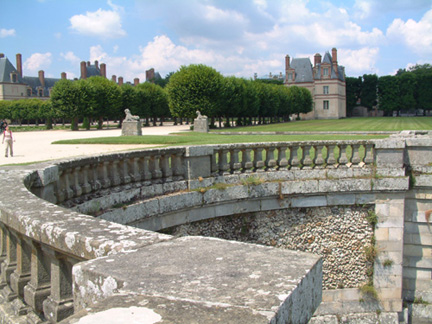
運河前由別開生面半圓形觀席台,成為眺望大運河透視全景的傑佳地點。
The semicircular viewing platform, originally designed with a fresh and innovative approach, became an excellent vantage point for taking in the panoramic perspective of the Grand Canal.
狄安娜庭園在楓丹白露宮的右側,花木繁茂、繽紛美麗以黛安娜雕像為核心。
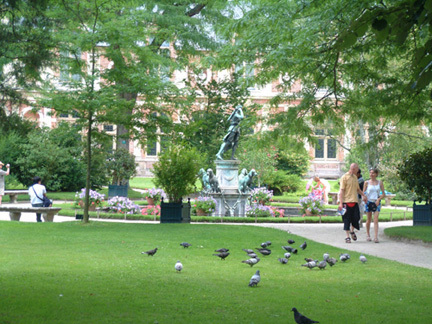
The Diana Garden, located to the right of the Palace of Fontainebleau, is lush and colorful, centered around a statue of Diana.
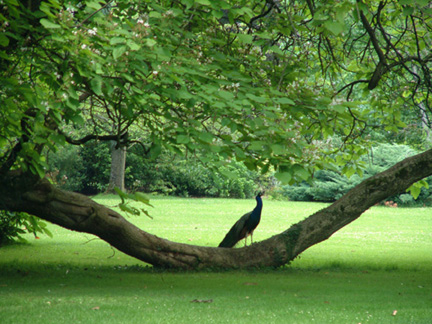
生氣蓬勃的庭院,幾隻孔雀點綴期間,自由自在隱喻自然本性。
A vibrant courtyard dotted with peacocks, freely roaming as a metaphor for natural instincts.
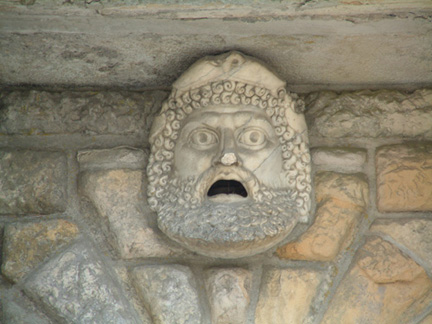
城堡以義大利歌劇人物面孔作為建築物的門面裝飾。
The castle features facades adorned with the faces of Italian opera characters.

Upon Francis I's death in 1547, Henry II inherited his predecessor's grand vision. Architect Delorme continued to complete the most luxurious ballroom and the famous spiral staircase of the Cour du Cheval Blanc. Henry IV also loved the Château de Fontainebleau, continuing to expand the palace and completing the Cour des Princes. At this time, a new decorative art gradually emerged, breaking free from Italian artistic influence, favoring paintings of ancient Greek and Roman themes or heroic epics, becoming secondary characteristics of the School of Fontainebleau.

By the time of Henry IV, the main architecture of the Château de Fontainebleau was largely complete. Subsequent Bourbon dynasty rulers made many alterations and additions. Louis XV finalized the Cour des Princes, and in 1634, architect Du Cerceau rebuilt the perfect spiral staircase of the Cour du Cheval Blanc. During the French Revolution, the castle was plundered, later becoming Napoleon’s favored palace. Until April 20, 1814, when Napoleon held a grand abdication ceremony at the Cour du Cheval Blanc, he never returned, being exiled to Saint Helena. During the Restoration, France’s last king, Louis Philippe, undertook major renovations, turning it into the museum we see today.