
The flower-laden capital, besides the winding Seine River, has three ingeniously crafted canals: Canal Saint-Martin, Canal Saint-Denis (Saint-Denis), and Canal Ourcq (Ourcq). Among them, the length of Canal Saint-Denis is nearly five kilometers, while the longest is Canal Ourcq, with over 100 kilometers. These three canals are all located in the northwest of the capital and converge at the Grand Bassin de la Villette. Canal Saint-Martin flows into the Seine at Place de la Bastille, Canal Saint-Denis intersects with the Seine at Saint-Denis, and Canal Ourcq extends northward, connecting to the Marne and Oise rivers. These three canals were once important waterways for transportation in the capital, and the Grand Bassin de la Villette was a reservoir that supplied drinking water to Paris in the past.
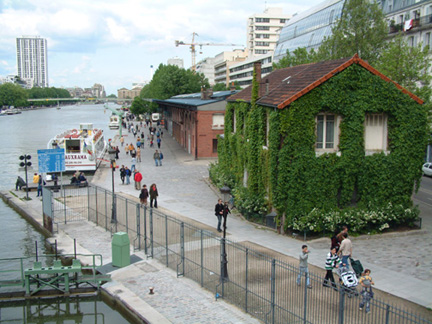
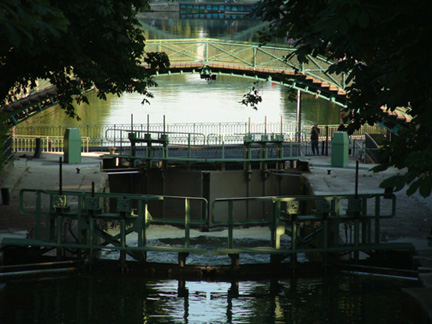
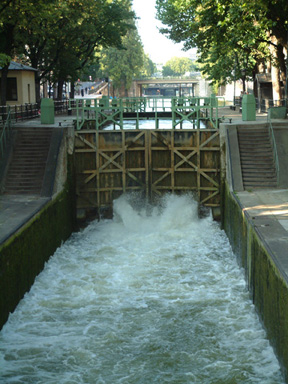
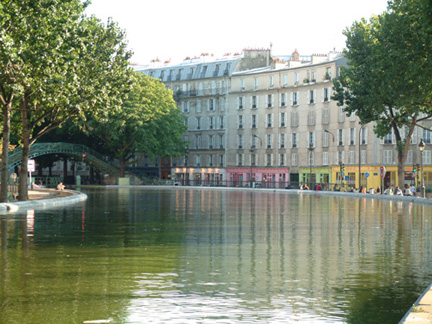
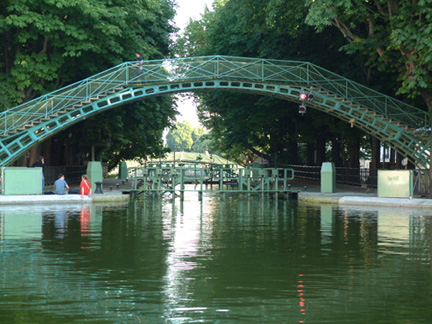
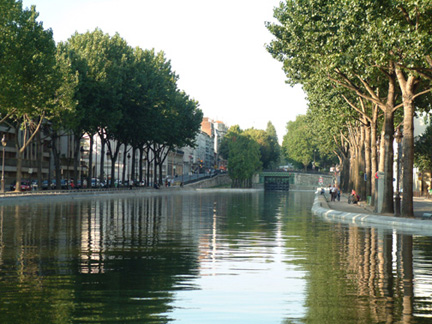
Origins and Features of the Canals: Among the three canals, only Canal Saint-Martin runs through the city center, creating a unique landscape for the capital. This canal was planned and designed by hydraulic engineer Brullee. Construction began during the reign of Napoleon I and was completed during the Bourbon Restoration (that is, 1825). Brullee introduced Canal Ourcq into the Grand Bassin de la Villette and directed both Canal Saint-Martin and Canal Saint-Denis into the east-west flowing Seine. It formed a water shortcut in Paris. In the past, thousands of merchant ships traveled back and forth here; today, many vessels still navigate its waters, especially tourist boats filled with curious tourists lingering along the waterway scenery of the capital. The open-air sections of the canal feature lush green banks, full of vitality. Tall, straight, and neatly aligned plane trees are planted on both sides, forming a leafy waterway together with colorful gardens and flowerbeds.
The footbridges over the canal, the automatically opening iron bridges, and the nine canal arches are major wonders of the waterway, becoming excellent places for leisure, cruising, and strolling in the capital.