. This park, lush with flora and bubbling springs, is neither a traditional classical French garden nor an English landscape of natural creation. It is the most original postmodern garden in the capital, akin to the Vilette Park, both serving as landmarks of twenty-first-century parks. Within a spectacular futuristic structural form, it showcases four outstanding themes: nature, change, architecture, and ingenious design, seamlessly integrating into the surrounding modern buildings. It has become the largest green recreational space on the southwest side of the capital, a must-visit garden for exploring the city's greenery.
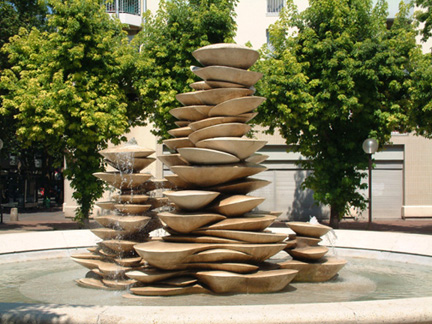
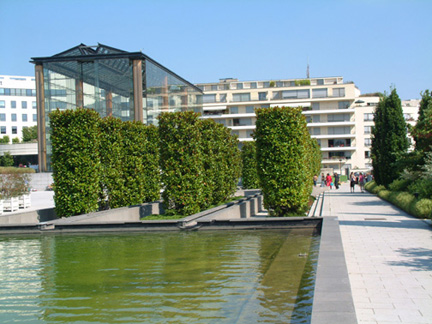
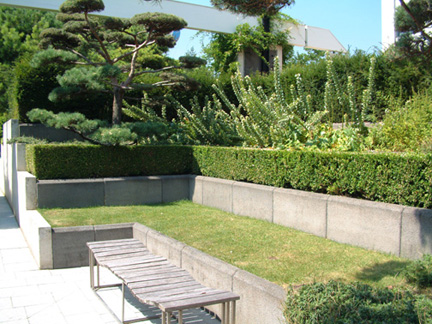
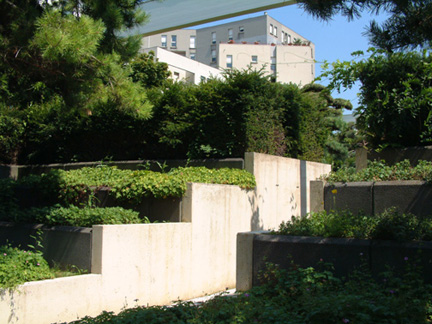
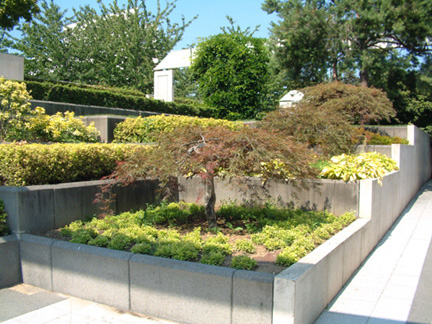
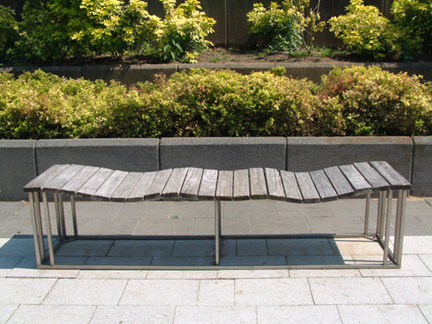
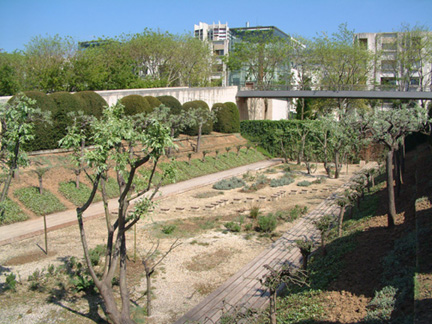
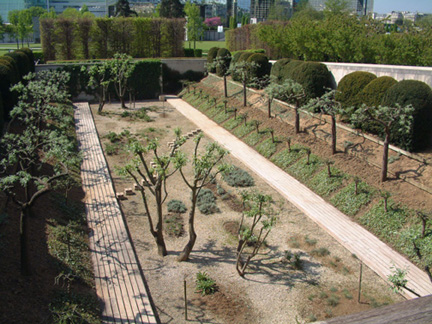
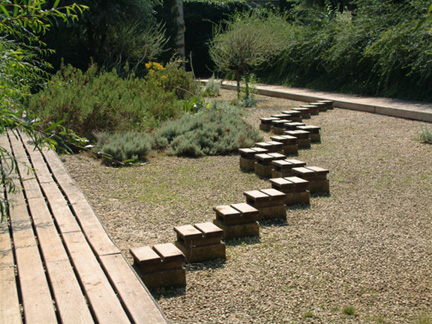
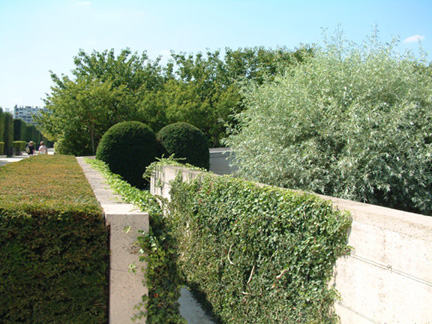
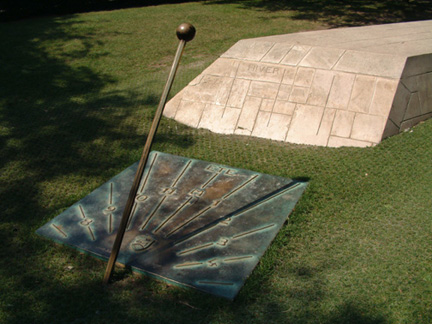
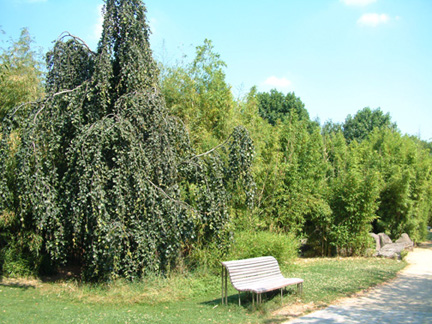
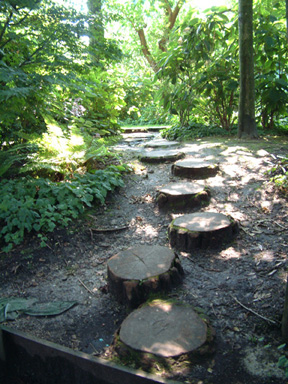
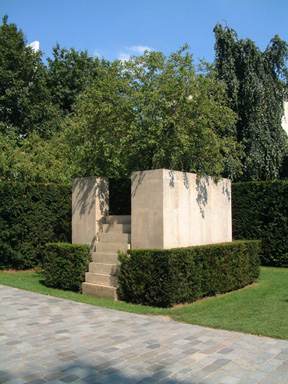
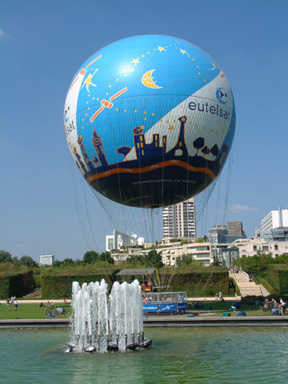
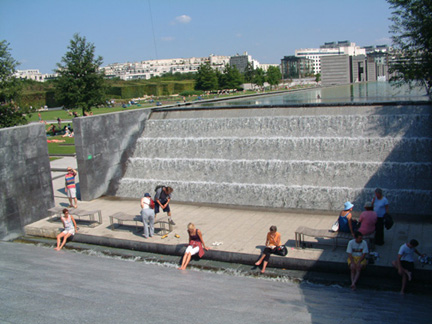
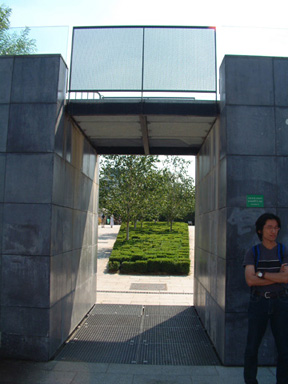
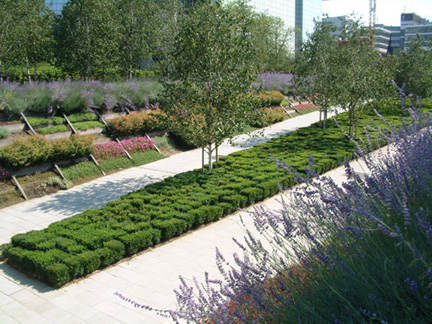
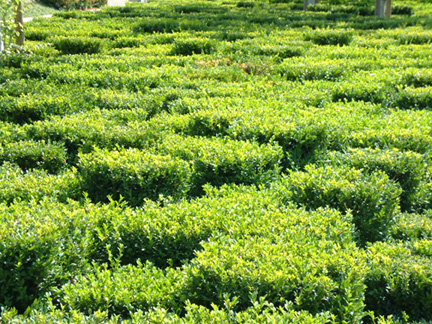
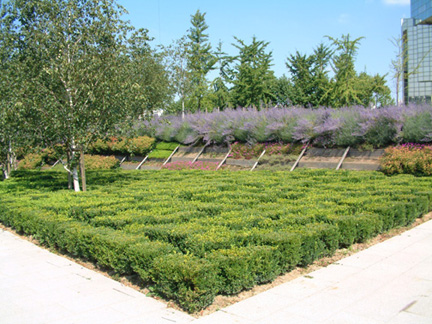
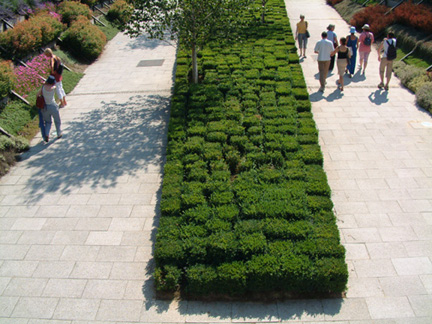
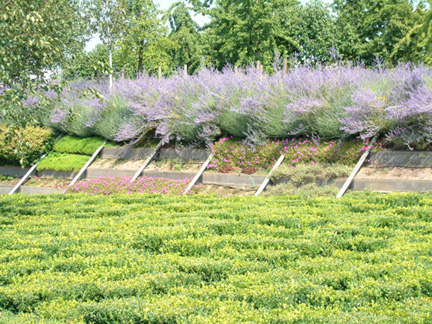
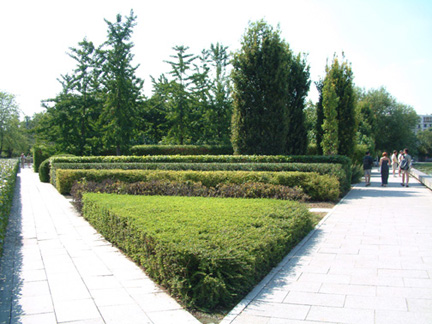
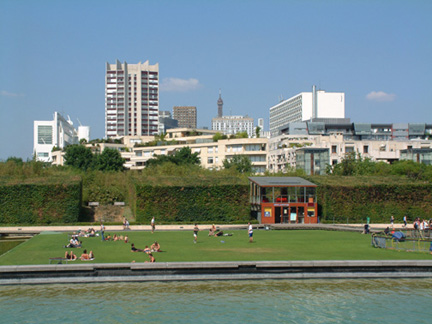
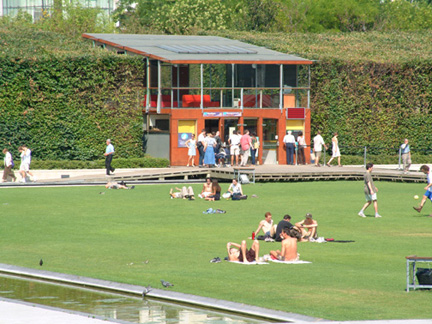
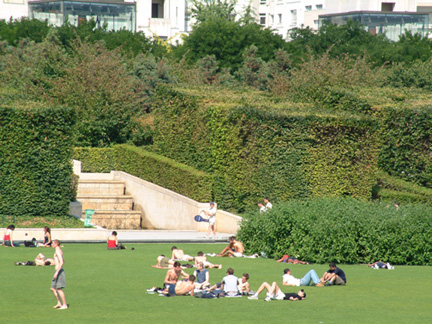
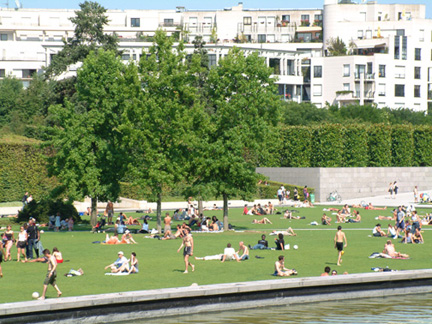
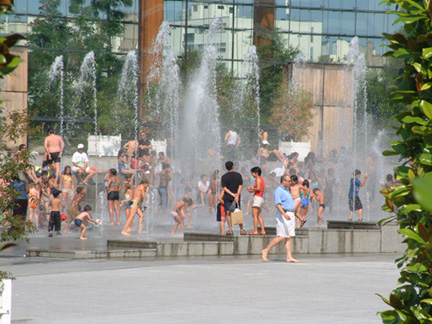
A unique modern fountain in front of Parc Citroën, resembling modern sculpture.Parc Citroën is anchored by two tall, expansive greenhouses, surrounded by an orderly series of magnolia columns.Within the most modern architectural planning, the entire park creates a harmony of natural architecture or architectural nature.Form, light and shadow, volume, and architectural structure are the defining features of the Parc Citroën.Nature, change, architecture, and ingenious design are the most distinctive features of postmodern parks.Modern streamlined wooden chairs in the Black Garden Green Corridor, used by visitors for leisure or sunbathing.Cité de l'Automobile: Themed series in gold, silver, yellow, green, blue, and red.A panoramic view of the silver garden, full of imaginative space, resembling a Japanese garden.Formed by gravel and silver-copper-toned plants in a silver garden, with a series of square steps traversing through it.In addition to landscape design, these thematic gardens construct their emotional appeal through the colors and attributes of plants and flowers.Constructed with golden-yellow plants and flowers in the Golden Garden, featuring a unique sundial.Behind the main garden is a most natural ecological garden, with slender bamboo and wild flowers, plants, and so on.The Shadow Garden in the Natural Ecology Park, with its intersecting tree-lined paths and lush flora, is an ideal place to escape the summer heat.A scene of nature, change, architecture and ingenious creation, the best portrayal of postmodernism.An unexpected canal on a high platform along the left edge of the park, adjacent to a series of modern buildings.At the end of the canal, two cascading waterfalls plunge into the natural setting—one at a 90-degree angle and the other at 45 degrees—providing a refreshing retreat for visitors during the sweltering summer heat.The canal corridor, with its architectural form, leads people to a picturesque and dynamic natural garden.Passing through the dual canal corridors, one arrives at a lush green natural theater of geometric forms.The verdant natural theater is formed by a series of unevenly trimmed small yellow oaks.Constructed through the juxtaposition of natural forms and architectural forms.Natural geometry becomes the best reflection of natural architecture.A lush green natural theater flanked by slopes dotted with a series of purple lavender.Natural geometry under multiple layers of volume and the rhythm of light and shadow.A unique building seamlessly integrates with the surrounding modern architecture.The Citroën Park has become the largest green recreational space in the southwest of Huadu.It also became the largest modern courtyard in Paris, serving as an outdoor play area for children and a great place to bask in the sun.The Citroën Park is famous for its expansive central lawn and is one of Paris's most important open spaces.The framework forms a water theater filled with musical rhythm between two large greenhouses, becoming a great place for children to play in the water during the height of summer.
Upon mentioning Citroën, one immediately associates it with the famous French luxury car brand. This site was formerly the location of the Citroën automobile factory. In 1915, Citroën established its factory here, which remained until relocating to the suburbs of Paris in 1970. During the urban renewal plan of the 1980s, renowned horticulturalists Alain Provost and Gilles Clement, along with architects Patrick Berger, J-P Viguier, and J-F Jodry, collaborated to create this masterpiece. Completed in 1992 under their ingenious design, it stands as a delightful ultra-modern garden. Named Parc André-Citroën to commemorate the famous French automobile manufacturer.