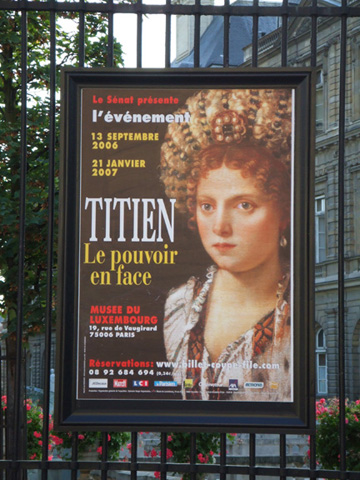
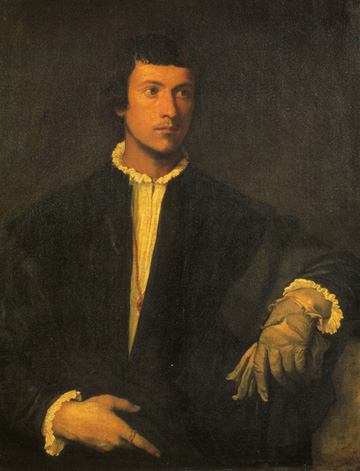
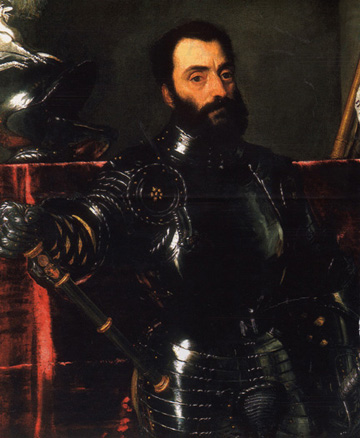
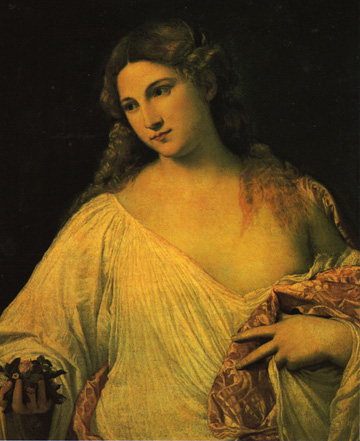
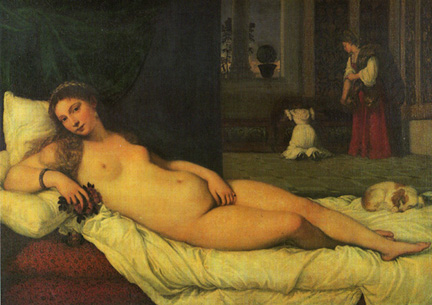
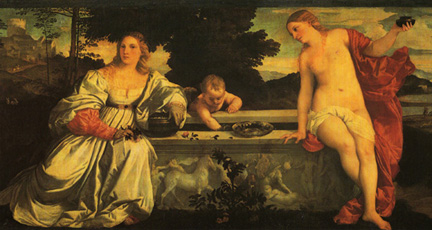
"Titian: The Face of Power" (Titien, Le pouvoir en face) was exhibited at the Luxembourg Museum from September 13, 2006, to January 21, 2007. At this special exhibition in the Louvre, over sixty masterpieces were displayed, including thirty-five portraits of Renaissance nobility. It was the most spectacular Titian exhibition in Paris in nearly thirty years, no wonder it became one of the most popular and visually striking exhibitions in the art capital of Paris in the second half of 2006. Of course, Titian was the most outstanding and renowned painter of the Italian Renaissance (surpassing the three masters of the Renaissance, namely Leonardo da Vinci, Michelangelo, and Raphael). At that time, all European nobles hoped to leave their eternal likenesses through him.
The Venetian School originated with the families of painters Jacopo Bellini and Antonio Vivarini, under whom the Venetian School was formally born. Venice's true Renaissance began in 1460, with Giovanni Bellini's painting reforms reaching its peak with Giorgione and Titian, until the end of Venice's Renaissance after the death of painter Tintoretto in 1594.
Titian was the representative painter who brought Renaissance Venetian painting to its highest peak after Bellini. His early teacher was Bellini, but the one who influenced him most was Giorgione. Starting in 1508, Titian abandoned traditional chiaroscuro sketching and focused on soft, gorgeous colors. Rich, gorgeous, and varied colors became the main feature of his paintings. Through his original modeling, ingenious composition, perfect form, and bright light, he created an original visual language, blending poetic imagery, sensuality, joy, secularism, and solemn sanctity. In Titian's hands, Venus is flesh and blood, vivid and lifelike, unlike the Florentine School's paintings which seem like classical statues, because he painted directly from living models. The portraits of powerful kings, figures, popes, or noble ladies painted by Titian vividly and perfectly display the inner spirit, emotions, and thoughts of humanism, such as the eternal portraits of Charles Quint, the most powerful man in Europe at the time; King François I of France; Pope Paul III; famous poet Pietro Aretino; Duchess Isabella d'Este, etc.