Address: 62 Rue de Lille, 75007 Paris
Phone: 01 40 49 48 14
Metro: Line 12, Solferino station
RER C: Musée d'Orsay station
Opening hours: 10:00–18:00; Thursday until 21:45. Sundays: 9:00–18:00. June 20 to September 20: opens at 9:00. Closed Mondays. (Free on the first Sunday of each month.)
Visit duration: Approximately 2–3 hours.
Website: Musée d'Orsay www.musee-orsay.fr
Artistic Background of the 19th Century:
The 19th century was an era when European civilization entered modernization and reached its peak of hegemony. Inheriting ancient Latin civilization, passing through the Renaissance and the positivist philosophical trends of the 17th century, under the influence of the Enlightenment's democratic and liberal thought in the 18th century, it triggered the French Revolution and established preliminary democratic social systems. Furthermore, due to the transformation of socio-economic structures brought by the Industrial Revolution, the achievements of the 19th-century industrial revolution entered the construction process of modernism, filling the entire European era with optimism and confidence in the future.
As civilization developed, the comprehensive changes in Western political, economic, and social structures influenced various intellectual currents and values in human society. In the new social structure and industrial system, the middle class was born. Art was no exception, gradually liberating itself from divine and royal authority and beginning to secularize. However, due to the development of civil society, artists began to serve the art market—the emerging middle class—as free individuals. Under the diverse manifestations of the market, art became more pluralistic. Especially without the domination of traditional feudal and religious culture, artists could fully express their personal styles. Consequently, art emphasized not craftsmanship and technique, but individual creation and talent; art no longer served predetermined purposes; personal style and autonomous art became the highest standards.
From Gare d'Orsay to Musée d'Orsay:
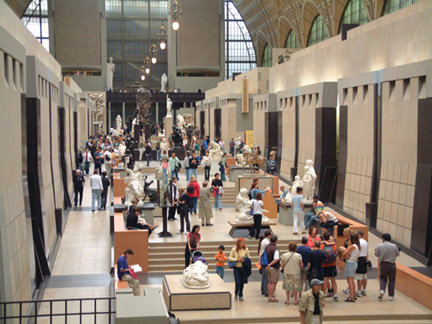
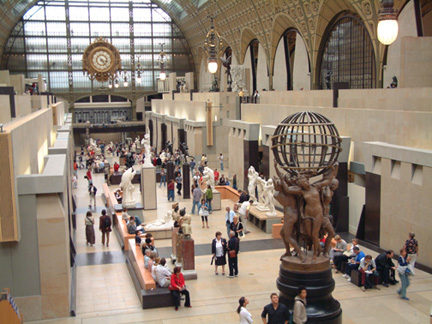
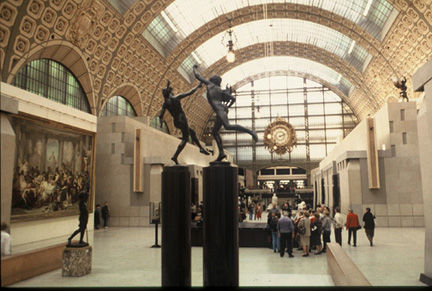
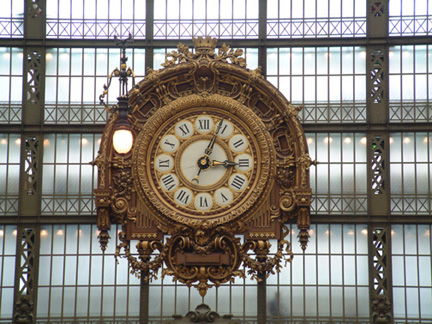
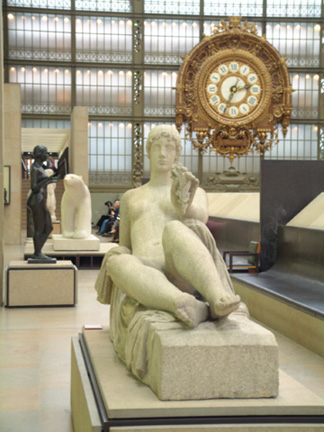
The predecessor of the Musée d'Orsay was originally a railway station built for the 1900 Paris World's Fair. It is contemporary with the Grand Palais and Petit Palais, sharing the same style, emphasizing reinforced concrete structural mechanics and using natural light to highlight the spaciousness of the interior space... The British called it "Beaux-Arts style." This railway station remained until after World War II before being relocated elsewhere. In 1974, the French government decided to establish a museum dedicated to 19th-century art here. Since the Orsay building faces the Louvre across the Seine, it was designated a historical monument in 1978. After over ten years of planning by architect Gae Aulenti, the former Orsay Railway Station became the Musée d'Orsay, opening on December 21, 1986.
The works of the Musée d'Orsay mainly come from the Louvre (such as works by Ingres, Delacroix, and Courbet) and the Jeu de Paume Museum (the Jeu de Paume received Impressionist paintings from the Louvre in 1946, was established in 1947, and all collections were moved into the Musée d'Orsay's 19th-century art hall in 1986), and indirectly inherited the collections of the former Luxembourg Museum (this museum was founded during the reign of Louis XVIII, specializing in collecting modernist art works of the time, until the mid-19th century when it collected Salon artworks—especially academic works).
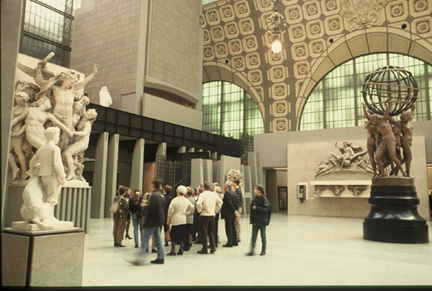
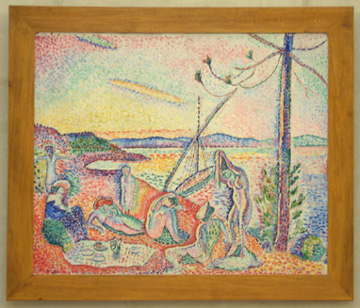
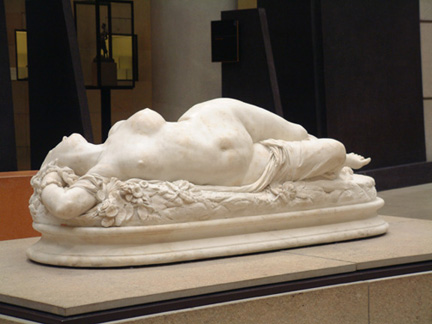
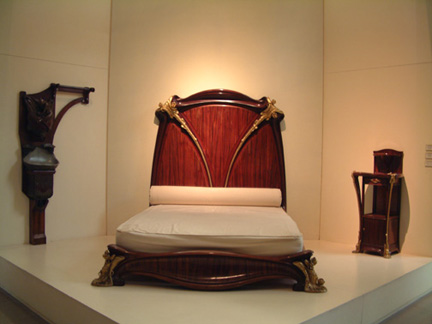
The painting collection of the Musée d'Orsay ranges from Ingres's Neoclassicism to Post-Impressionism (pointillist works by Matisse before joining Fauvism in 1904); sculpture ranges from Napoleon III (Second Empire) to Maillol's works in the early 20th century. Additionally, there are functional Arts and Crafts works, a movement that ended only on the eve of World War I. Other collections include architecture and photographs, among others.