Address: 6 Place d'Iena 75016 Paris
Phone: 01 47 23 61 65
Metro: Line 6 Boissiere
Line 9 Iena
Opening hours: 09:45–18:00
Closed: Tuesdays
Visit duration: approx. 2 hours
Website: Musée Guimet www.museeguimet.fr
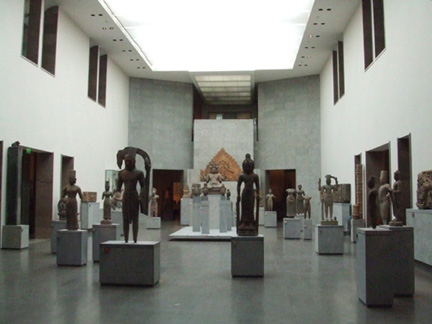
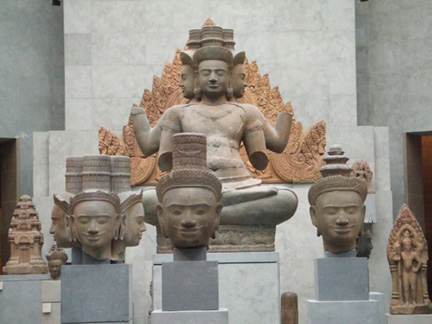
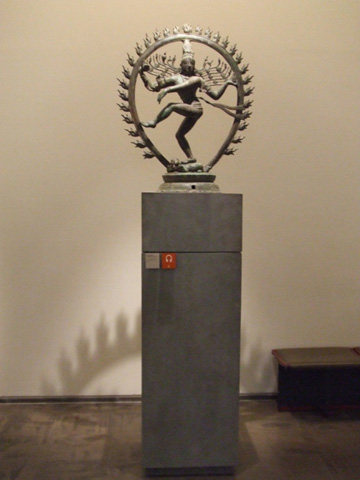
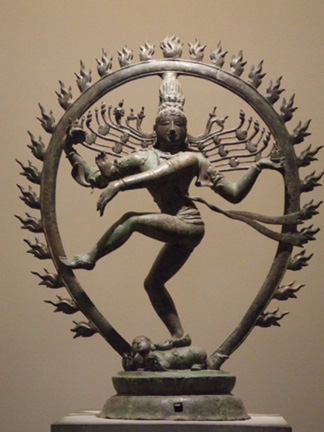
The Guimet National Museum of Asian Art is located in the Chaillot district, just outside the Iena metro station on the left side of the Eiffel Tower, forming a triangle with the Palais de Tokyo Contemporary Art Center and the Fashion Museum. It is one of the world's richest museums in Oriental art collections.
Founded on the private collection of Lyon industrialist and collector Émile Guimet, the museum was established as a Religious Museum in Lyon, France, in 1879. Ten years later (December 20, 1889), it moved to the capital, Paris, where this neoclassical building was constructed beside Place d'Iena for the Religious Museum. After the founder's death in 1918, the museum gradually diversified its collections, expanding from religious artifacts to other fields. In 1928, it inherited a batch of fine Afghan artworks from archaeologist Alfred Foucher, and that same year the Guimet Museum became national. It subsequently inherited the Southeast Asian art artifacts owned by the Indochina Museum of the Duc d'Alsace.
In 1945, the Guimet Museum exchanged its Ancient Egyptian collection for Far Eastern masterpieces from the Louvre, shaping the Guimet National Museum of Asian Art as it exists today. Since then, it has continued to receive numerous private donations, such as Himalayan (Nepal and Tibet) artworks from collector Fournier, Asian textiles from collector K. Riboud, Chinese ceramics from collector Rouset, Chinese and Korean porcelain from collector Calman, Dunhuang murals from collector T.C. Loo, and steppe art (a civilization distributed across the Central Asian steppes during the Bronze Age) from collector Golschmann, making the Guimet National Museum of Asian Art even richer and a major hub for Oriental art collections.