What is the favorite sport of the French? Guess: popularly, it is undoubtedly football, rugby, handball, basketball, and tennis; besides track and field, swimming, rowing, fencing, judo, taekwondo, etc., cycling is certainly one of the mass-participation sports. Then, when every summer vacation arrives, the eagerly anticipated major sporting competition is the Tour de France. This is the most famous and largest bicycle race within France, featuring fierce annual competition among top cyclists from around the world. Starting on July 1st this year from Strasbourg in eastern France, the course is divided into 20 stages, covering a total distance of several thousand kilometers. Participants are required to complete approximately 200 kilometers within six hours each day. The route goes from northern France through Belgium, loops down to Normandy, Burgundy, and the Massif Central, then crosses the Alps to central France, with the final, most spectacular stage ending on the Champs-Élysées in Paris.
During the summer vacation period, each stage of the Tour de France becomes a tourism resource for the respective regions. Throughout the journey, whether passing through cities, rural fields, coastlines, or high mountains, the crowds lining the streets waving flags and cheering are always attracted. Daily mass media report extensively on each stage's highlights, while television provides live coverage from land and air. The winner of each stage dons the yellow jersey, stands on the podium, and receives flowers and kisses from beautiful women on either side, which is truly enviable. This "yellow jersey" is what every Tour de France cyclist dreams of.
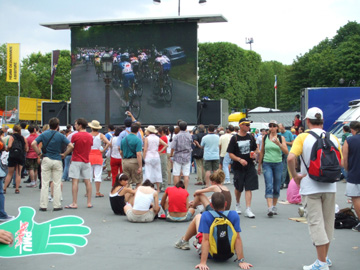
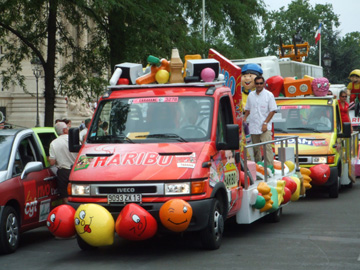
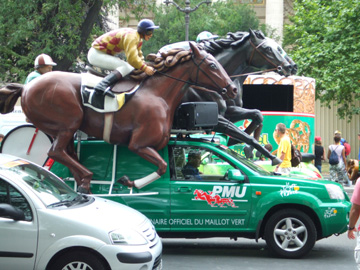
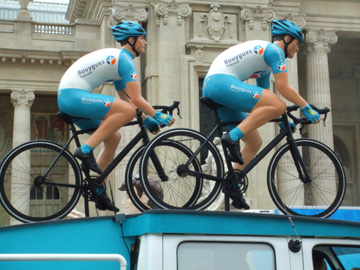
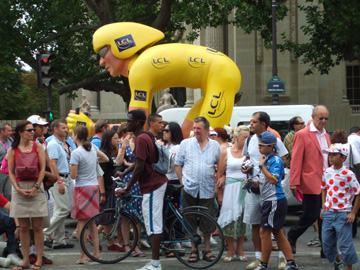
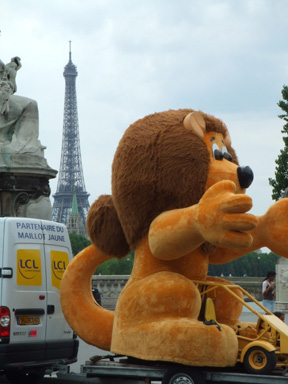
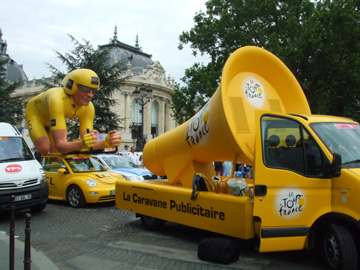
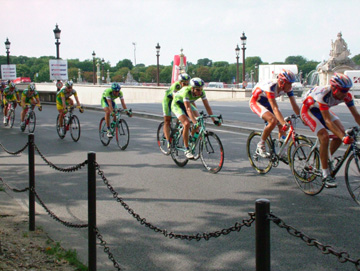
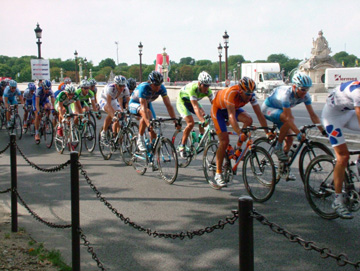
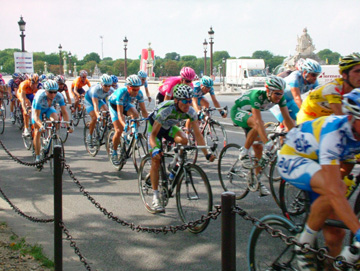
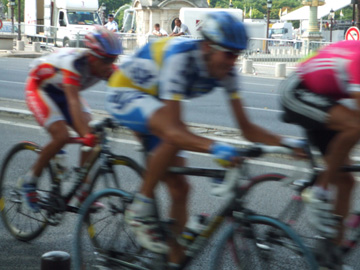
This year (Sunday, July 23), just like previous years, marked the final stage (only 154 kilometers long) of the Tour de France. Paris once again became the focal point for sports media worldwide and global cycling enthusiasts, serving as the most efficient free promotional campaign for the city. Early that morning, the Champs-Élysées, considered the most beautiful avenue in the world, along with the Place de la Concorde and the area surrounding the Louvre, were blocked off by barricades. Crowds from all over the world occupied key positions early on, preparing to witness their admired cyclists. The entry of the Tour de France into the city was scheduled for around 5 PM. By afternoon, the Champs-Élysées, Place de la Concorde, and areas around the Louvre were packed with people. The spectacle was more magnificent than the French National Day celebrations. The exit of the Champs-Élysées metro station was completely clogged. A giant screen broadcast live the race near the outskirts of Paris. During this time, the Champs-Élysées resembled a carnival, with colorful advertising vehicles from major sponsors parading in formation—a bonus program not seen on TV broadcasts. The empty, quiet avenue was finally awakened by the horn of the lead car. Led by police on three heavy blue motorcycles, a group of cyclists in colorful jerseys sped past one by one. People waited patiently for four or five hours, watching the team flash by in seconds. It is hard to imagine the patience required for such sporting obsession. Fortunately, the cycling team circled the Champs-Élysées, Place de la Concorde, and the Louvre area eight times, allowing people to at least glimpse the intricacies. The crowd cheered, applauded, waved flags, and shouted wildly, reaching a peak of frenzy. This was the greatest collective entertainment of the holiday.
Following Lance Armstrong's seven consecutive titles, French media hoped for a French rider to emerge victorious in subsequent years. Unexpectedly, this year, American Floyd Landis won (he was previously a teammate of Armstrong). An unexpected figure who had been hidden in the shadow of the seven wins, he now shone brightly. Until the last few stages, where it was unclear who would win, he ultimately stood out in the final two races. The final award ceremony also took place on the Champs-Élysées, with the majestic Arc de Triomphe as the backdrop. All these arrangements were not surprising. Although an American won the Tour de France, the biggest winner was Paris, as it attracted more American tourists. Another notable aspect was that Asian mass media also provided special live coverage of this race. Especially in China, the kingdom of bicycles, full coverage was provided for the first time, hoping for Asian cyclists to participate in future events, which would bring a new trend to Asian cycling.