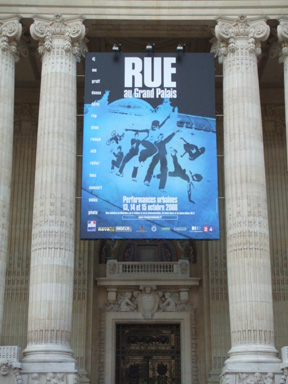
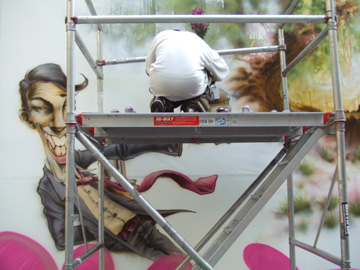
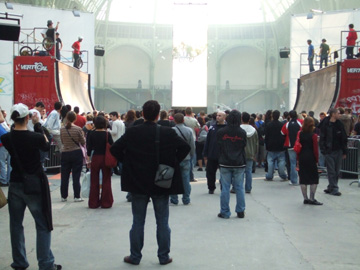
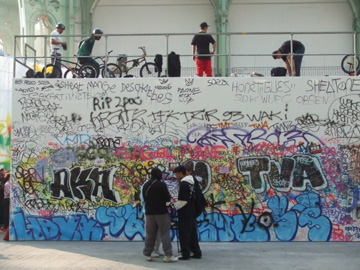
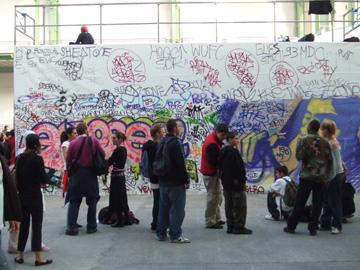
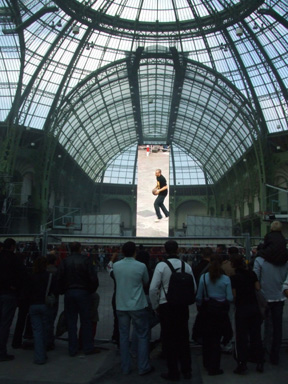
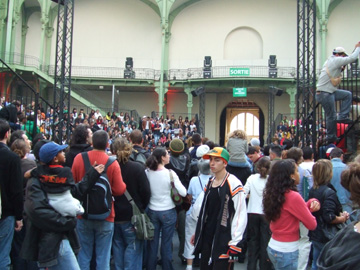
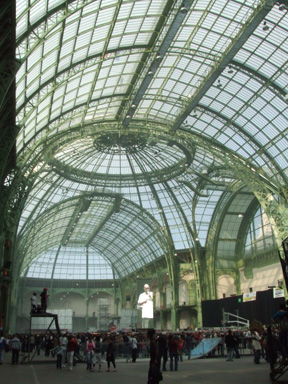
"Street or Urban Culture Showcase" was a three-day event held on October 13–15, 2006, at the Grand Palais in Paris. Organized by the French Ministry of Culture specifically for urban youth, particularly those from the suburbs, its choice of venue—the Grand Palais, a showcase of French culture—likely carried specific political and cultural significance.
Recall the social unrest in mid-October 2005, when young people in the northern and southern suburbs engaged in weeks of nighttime guerrilla warfare against riot police. The burning of cars and public buildings (schools, shops, sports facilities, police stations) resembled combat scenes in Baghdad, drawing intense international media coverage. Now, on the eve of the anniversary of that suburban unrest, although the surface appears calm under the Interior Minister's tough policies, the underlying issues remain unresolved. A latent current simmers beneath the suburbs, ready to erupt at any moment. Government authority is frequently challenged; police become targets of attacks by young gangs (or their stations are burned, leading to the absence of police stations in many suburbs). In recent weeks, tensions have risen again, with reports of young people beating police, burning cars or buses, and early morning raids involving hundreds of riot police arresting suspects. Many journalists were invited to cover these dramatic "police chasing thieves" scenarios and ongoing clashes between suburban gangs and society.
The "Street or Urban Culture Showcase" is clearly a grand political, social, and cultural event, intended to demonstrate the government's attention to urban fringe or subcultures (non-mainstream cultures). It seeks institutional validation and further integration, serving as an imaginative strategic move ahead of the upcoming French presidential election.
Indeed, fringe or subcultures have always existed in every corner of the city, thriving especially in metropolitan suburbs. By the 1980s, they had become the mainstream consciousness of contemporary American art. The extraordinary music of African-American singer Michael Jackson, the socially conscious Rap music and phenomenal physical dance of young people in New York's Black neighborhoods, and graffiti moving from subway stations and city walls into art palaces—all became prominent. Most famous were star artists Keith Haring and Jean Basquiat. This quickly spread from New York on the U.S. West Coast to France. Artists like R Combas, H Di Rosa, R Blanchard, and F Boisrond of the "Figuration Libre" movement were also involved in subcultural graffiti and comics.
This common social phenomenon across Western metropolises, under postmodern behavioral consciousness, raised various racial, social, political, economic, and cultural issues through Rap music, physical dance, and wall graffiti in response to challenges from public power. The formation of suburban culture led to the rise of popular and mass civilization, which continues to navigate between social and artistic institutions today.
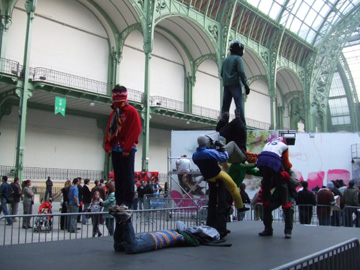
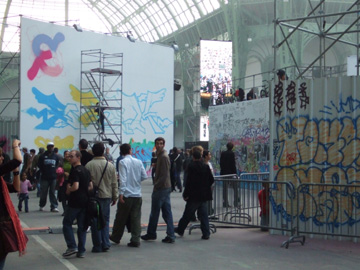
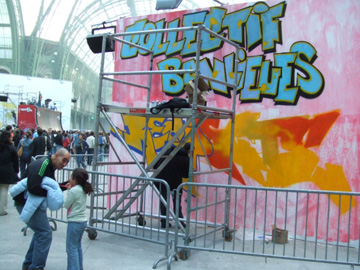
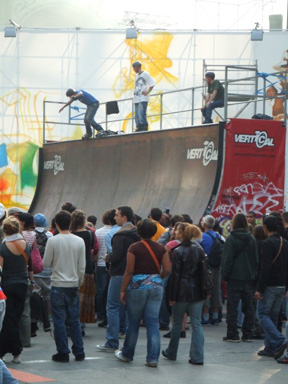
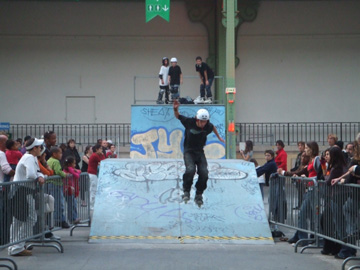
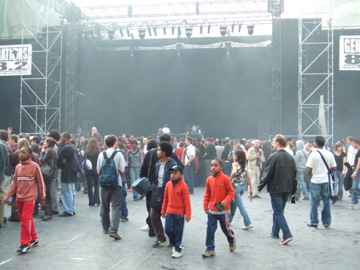
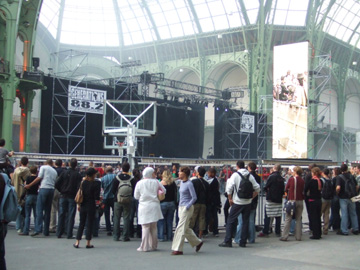
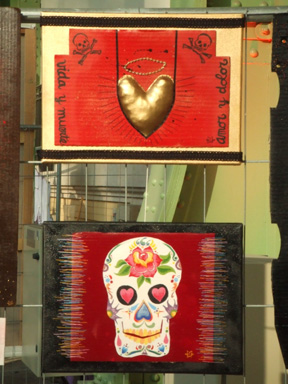
"Street or Urban Culture Showcase" was a rare, grand, free collective activity for young people, attracting unusual teenagers from both the city and suburbs. A long queue stretched nearly one kilometer in front of the Grand Palais, with tens of thousands of young viewers enthusiastically responding to this collective public event organized for them. The Grand Palais became a vibrant stage for Parisian youth culture, filled with the vitality and atmosphere of youth—a rarity in the Hip Hop world. The event included Rap music, Break Dance, Tag graffiti, video art, exhibitions, and sports favored by youth (such as basketball and roller skating).