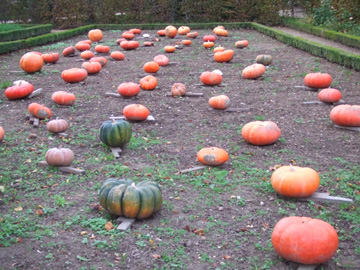
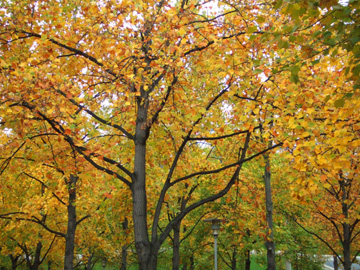
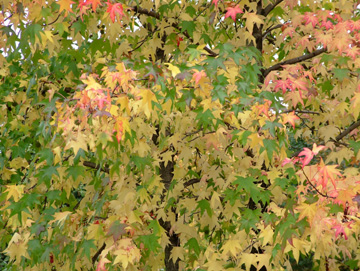
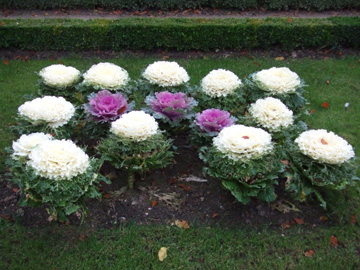
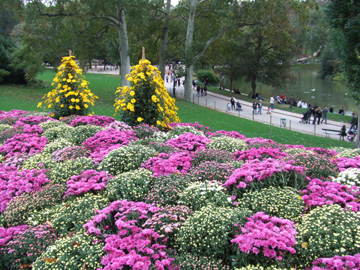
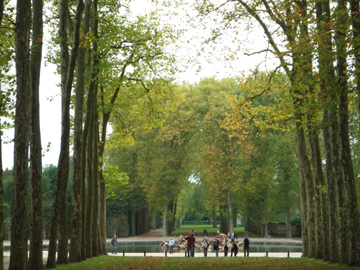
This autumn, the weather in Paris was unusually warm and humid, resembling an extension of summer. (Although August saw low temperatures around 17°C or lower, breaking a 30-year record for coldness, as if a bleak autumn had arrived.) From September to late October, average temperatures remained above 20°C, breaking a 50-year high-temperature record. Breaking two temperature records in just three months is hard to imagine. In this abnormal season, Parisians seemed delighted to have their summer extended, basking in the warm sun. Crowds filled the back gardens for walks, outdoor cafes were packed, and parks and tree-lined avenues remained lush green, with only slight hints of red, yellow, or withering leaves. Clearly, global climate change is heating up. Remember the summer of 2004, when extreme heat killed nearly 20,000 people in Paris in just a few days? 2005 was still the hottest year on record. The natural ecology of the entire Earth has sounded the alarm. Global warming and climate change are evident in unprecedented tsunamis in Southeast Asia and massive hurricanes in New Orleans, USA. Floods and droughts across continents, along with extreme heat and cold, show stark contrasts. Scientists warn that if humans continue to overfish without restraint, there will be no fish left to eat by 2050.
In this truth no one wishes to face, everyone witnesses the changes in natural ecology. If people truly open their eyes to observe our living space, former US Vice President Al Gore walked alone across the world, sharing his experience to make people realize they should sacrifice some personal convenience to achieve sustainable development for the Earth. The film "An Inconvenient Truth" premiered during this unseasonably warm autumn, ringing a wake-up call for humanity and constructing a vision for Earth's survival, requiring immediate joint participation and action.
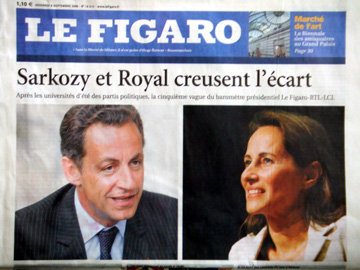
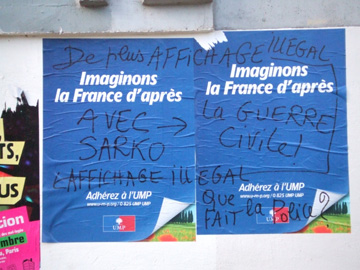
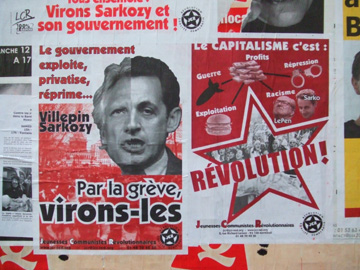
During the summer, major French political parties entered a period of intense competition for next spring’s presidential election. Summer university gatherings focused on highlighting or publicly declaring presidential candidates, with strategic operations and public policy discussions fully underway, heating up the race. After autumn, the presidential election entered its climax. Every ambitious candidate sharpened their skills. The most prominent and media-savvy was Nicolas Sarkozy, leader of the governing right-wing UMP party and current Minister of Interior Affairs. He declared himself a candidate two years ago, positioning himself as a new generation distinct from President Chirac. Winning the UMP leadership last year paved his way for the presidency. Almost all strategic operations and administrative efforts served his personal quest for power, making him a dark horse in the 2007 election. Nearly all mass media were co-opted, providing daily news coverage more authoritative than Chirac or Prime Minister Dominique de Villepin. Although UMP appeared united, it clearly split into Chirac and Sarkozy factions. President Chirac, a seasoned politician, made reserved statements about his intentions. The Chirac faction, represented by Prime Minister de Villepin, along with aspiring former UMP leader and current Defense Minister Michèle Alliot-Marie, attempted to challenge Sarkozy’s dominance. Chirac’s allies, through National Assembly President Jean-Louis Debré, warned that “those who create wind will be swept away by storms,” targeting Sarkozy. This set the stage for an exciting right-wing contest.
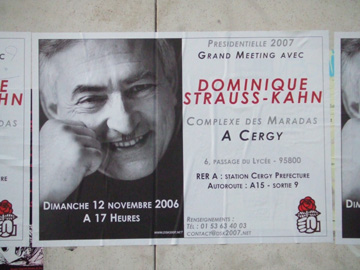
The Socialist Party’s (PS) 2007 presidential candidacy was complex and dramatic. During summer gatherings, various factions converged under cloudy skies, with leaders vying for influence. Former Prime Minister Lionel Jospin drew the most attention; his intent to return to the presidential stage was clear. With his experience and influence, he was the best choice for the Socialists. However, after a mistake in the first round of the 2002 election, he withdrew from politics and lived in seclusion for four years. His comeback was confusing, though he still had supporters. Changing times and rising new generations led him to step back based on polls and conditions. Surprisingly, Ségolène Royal, Speaker of the Poitou assembly and partner of current Socialist leader François Hollande, stood out. A former minister under Mitterrand and Jospin, her polls consistently showed her leading among left-wing candidates capable of defeating Sarkozy. In the trend of female leadership, this possibility seemed real. Two other heavyweight candidates were Laurent Fabius, former young Prime Minister under Mitterrand, focusing on left-wing ideology, and Dominique Strauss-Kahn, former Economy and Finance Minister, influential in social democratic discourse. Jacques Lang, Mitterrand’s Culture Minister, considered a dark horse favored by youth for his cultural contributions, also stepped back and endorsed Ségolène Royal. By mid-autumn, the PS had held three public televised debates, with members voting on November 16 to select the best candidate, demonstrating the party’s democratic spirit.
The centrist UDF party was led by its chairman François Bayrou. The UDF often played a balancing role between left and right, holding significant sway in the second round of presidential elections, often leaning right. The far-right included Philippe de Villiers and Jean-Marie Le Pen of the National Front (Front National), advocating for French interests, anti-immigration, etc. Amidst unemployment, social unrest, illegal immigration, and globalization, the far-right grew stronger, becoming an undeniable neo-conservative trend in the West.
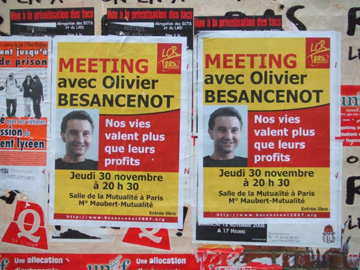
The French Communist Party has been dying politically, becoming insignificant. Its leader, Marie-George Buffet, hoped to ally with “anti-liberalization” camps, such as anti-globalization hero José Bové and far-left figures Arlette Laguiller and Olivier Besancenot. They represent voices from society’s margins. However, they knew that to defeat the right, all left-wing members must unite—a difficult task. The Green Party’s image was tarnished by infighting; its leader was unclear, but former Ecology Minister Dominique Voynet led the charge. Environmental awareness rose with the times. Nicolas Hulo, host of France’s top TV geography program “Ushuaia” and former ecological advisor to President Chirac, sought to enter the race, proposing environmental pacts. Socialist candidate Laurent Fabius and UDF leader François Bayrou invited him to join their camps, promising to include him in governance if elected. These scenes played out before the election. About 36 candidates, double the number in 2002, competed. In this postmodern, globalized era, like the warming Earth, records were being broken. Unexpected results were likely. The French presidential drama was unfolding, with the winner revealed next spring.
Last autumn, the suburbs of Paris experienced their hottest moments, marked by social riots involving youth. On the anniversary, improvements were unknown. Once media lost interest, the topic faded, disappearing as if it never existed. Was this solely the media’s fault? No, there were political, social, economic, and educational issues. Suburban areas suffered from overcrowded housing, unemployment, class, and racial segregation. Beating police, burning cars and buses, gang fights, drug smuggling, and threats to public safety were common, creating a deep impression of danger in some Parisian suburbs. It was advisable to avoid these areas. Even police, firefighters, medical staff, and civil servants faced risks. Fortunately, the intense nighttime guerrilla warfare with riot police seen this year was absent. Of course, social challenges challenging public authority were not limited to Paris suburbs; they spread across France. The most severe incident on the anniversary occurred in the suburbs of Marseille, where a bus was burned, severely injuring a female passenger. Such problems could not be solved merely by the Interior Minister’s tough policies. In the upcoming election, domestic security, unemployment, and globalization became resources for the far-right.
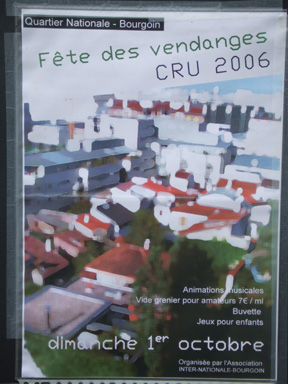
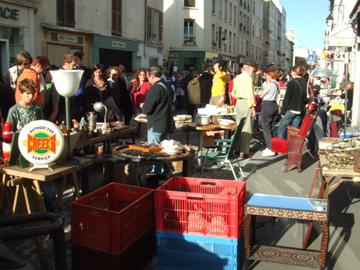
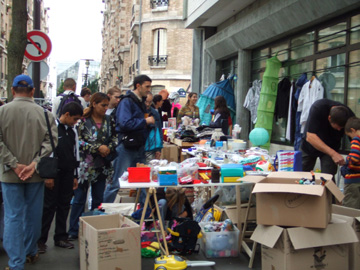
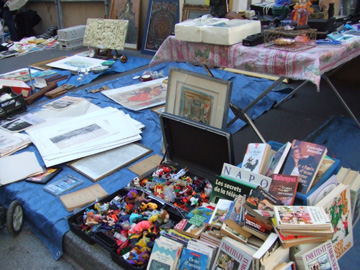
During mid-autumn in Paris, every neighborhood held clearance sales. Residents sold unused, old items (clothes, daily utensils, books, tools, etc.) at flea markets, finding affordable goods and connecting with neighbors. As the capital of art, every district in Paris has artist villages or studios. Annually, one weekend is opened for free public visits. The 13th arrondissement’s artist villages and studios open annually in mid-autumn, becoming a regular cultural exchange activity. Following “Paris Beaches,” the autumn carnival featured concerts, theater, drama, and visual arts. International Heritage Days, Garden Festivals, and Museum Nights energized Paris’s arts scene. Mid-autumn marks the start of the new season for modern and contemporary galleries. Major museums and special exhibitions took place. The annual FIAC 2006 (Paris International Modern and Contemporary Art Fair) was grandly held in late October at the Grand Palais and the Cour Carrée of the Louvre. Annual literary awards were announced in mid-autumn, starting with the Prix Femina, won by Canadian writer Nancy Huston. The prestigious Goncourt Prize went to Jonathan Littell, a young American writer living in Spain, for his novel Les Bienveillantes (The Kindly Ones), which had previously won the Académie Française Novel Prize. Congolese-American writer Alain Mabanckou won the Renaudot Prize for Parc-Épique Mémoires. Unbelievably, none of the award winners this year were French writers; they were outstanding novelists from North America writing in French.