The term "Fifth Republic" refers to the French political era from the end of World War II to the present. Under alternating party rule, power has shifted from right-wing to left-wing governments and back again. Among the five presidents—Charles de Gaulle, Georges Pompidou, Valéry Giscard d'Estaing, François Mitterrand, and Jacques Chirac—only Mitterrand belonged to the Socialist Party.
The international situations and governing conditions under these five presidents were vastly different. During de Gaulle's tenure, France focused on post-war reconstruction and an independent path, withdrawing from NATO, becoming the first Western nation to establish diplomatic relations with the People's Republic of China, and overseeing decolonization in North Africa and Southeast Asia. De Gaulle resigned following the student protests of 1968.
Pompidou was elected president amidst the aftermath of the 1968 student uprisings and a consumer society. A new wave of liberal thought led to profound shifts in social values, including the rise of new women, sexual liberation, and the formation of environmental awareness. The European Union expanded to nine members (including Denmark and the UK), and the Yom Kippur War triggered an oil crisis. President Pompidou died in office (1969–1974).
President Giscard d'Estaing faced the global oil crisis, prompting France to seek new energy sources by heavily developing nuclear power, making it Europe's largest nuclear nation with the most nuclear power plants. Under the new women's movement, France became the first country to pass laws allowing free abortion. Amidst East-West tensions and the European missile crisis, the 1970s ended with the Southeast Asian boat people crisis and the second oil crisis.
After multiple attempts, Mitterrand was finally elected president in 1981. His left-wing government abolished the death penalty, nationalized heavy industry, introduced local autonomy, established a five-week paid vacation, and implemented a wealth tax, fundamentally changing France's social policies. He accepted Southeast Asian boat refugees and fostered Franco-German friendship, driving the European Union. From Mikhail Gorbachev's rise in 1985 and the subsequent easing of East-West tensions to the fall of the Berlin Wall in the late 1980s, German reunification in the 1990s, and the dissolution of the Warsaw Pact, France moved from the post-Cold War landscape into globalization.
Jacques Chirac, who had long dreamed of the presidency, finally assumed office. The EU expanded to fifteen countries. In the era of the internet and strong globalization trends, aviation and high technology (including military industry, nuclear energy, and high-speed rail) became drivers of French industry. Politically and economically, France maintained its stance as an influential major power. However, after the September 11 attacks in the US, France's international role seemed more ambiguous. Caught in a complex mix of love and hate for America, while strengthening ties with Germany and Russia to counterbalance US influence, France participated in the war in Afghanistan but blocked joint participation in the US-led Iraq War with Germany. Following the rejection of the EU Constitutional Treaty referendum ("Non") in 2005, France lost some core influence within the EU. In this rapidly changing globalized world, adaptability has become essential for the current French administration.
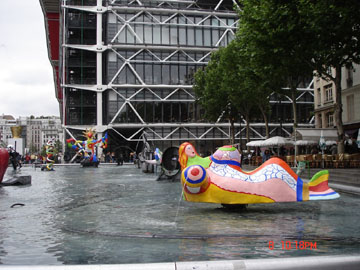
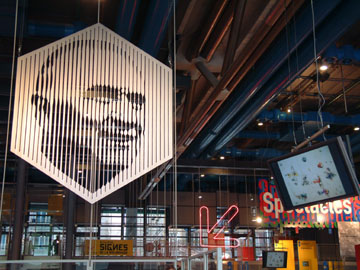
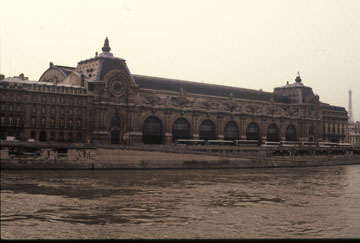
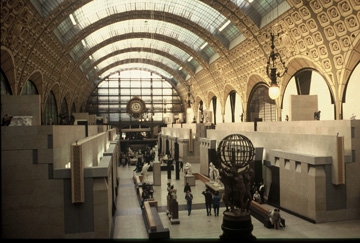
Regarding metropolitan construction in Paris during the Fifth Republic: President de Gaulle initiated the grand modernization plan for La Défense. The only large building he left behind in central Paris is the circular headquarters of Radio France. President Pompidou, an enthusiast of modern and contemporary art, foresaw the creation of the Centre Pompidou to revitalize Paris as a hub for contemporary art, thereby setting a precedent for presidential cultural projects. President Giscard d'Esta planned the renewal of the Villette area in northern Paris and transformed the Gare d'Orsay into the magnificent Musée d'Orsay, a museum dedicated to 19th-century art, though it was not named after him.
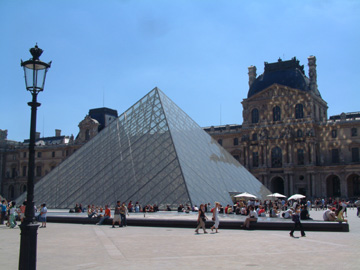
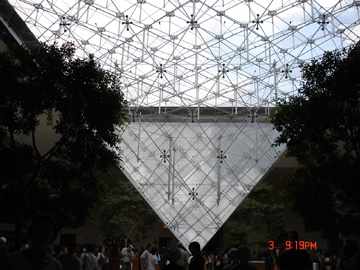
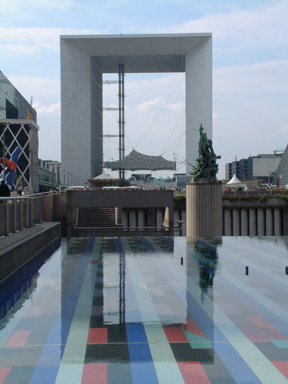
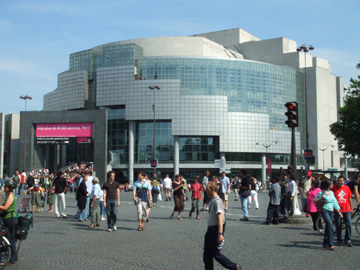
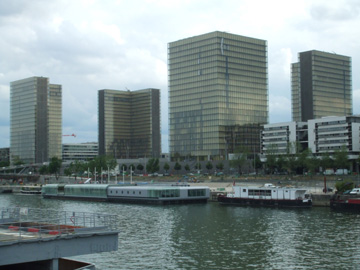
President François Mitterrand, a Socialist, served the longest term of the Fifth Republic (1981–1995). He was the most ambitious president since Napoleon III and truly transformed the Parisian landscape. He proposed a series of "Grand Projects": the Louvre Pyramid, the Bastille Opera, the Grande Arche de la Défense ("New Arc de Triomphe"), and the Bibliothèque nationale de France (BnF), also known as the Mitterrand Library. The Villette district in northern Paris was revitalized, and the Parc de la Villette and Parc André Citroën, the largest and most modern parks in post-war Paris, were completed, ushering in a new era for Paris in the 21st century.
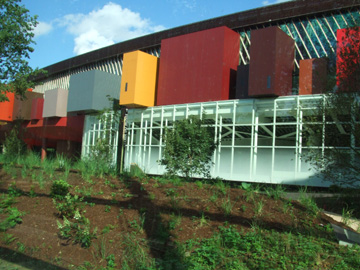
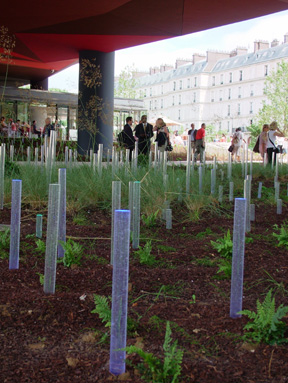
President Chirac declared upon taking office that he would not follow convention. Fascinated by non-Western and ancient civilizations, his enduring legacy was the construction of the Musée du Quai Branly, dedicated to the primitive arts he loved, leaving a unique and eternal memory of his two terms as president.